
Central Seawater Desalination Systems for Coastal Sites, Villas, and Shared Living Areas
Mayıs 22, 2026
Seawater Desalination System Capacity Calculation: Daily Consumption, Peak Flow and Storage Planning
Haziran 10, 2026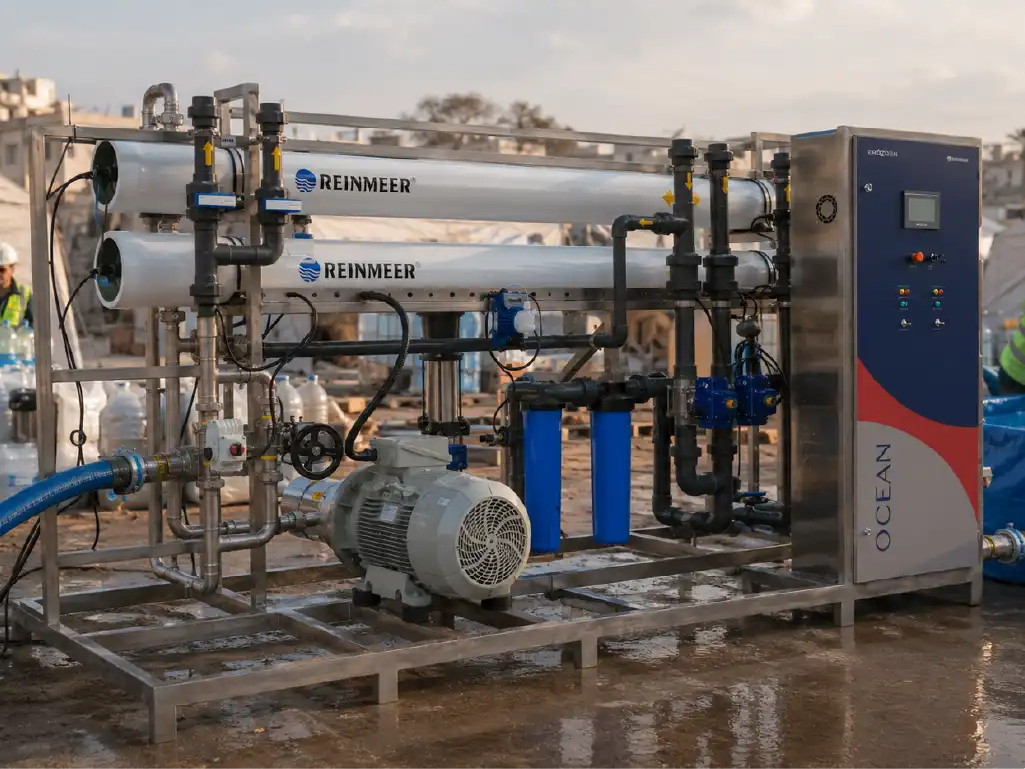
In emergency situations, access to clean water is not merely a matter of comfort. It is a fundamental requirement that directly affects public health, operational continuity and crisis management. In events such as earthquakes, floods, fires, infrastructure failures, disease outbreak risks, temporary camp installations or remote field operations, existing water sources may become unusable.
For this reason, a Mobile Water Treatment Unit is a critical solution that can be rapidly deployed in different locations and is designed to treat raw water in order to obtain safe utility water or drinking water. In scenarios where fixed water treatment plants cannot be installed, transportation becomes difficult or the existing network is out of service, portable treatment systems support water safety during a crisis.
Especially in the first hours and days after a disaster, water must be controlled in terms of microbiological, chemical and physical quality. At this point, a Mobile Water Treatment Unit stands out with its advantages such as rapid installation, flexible capacity, modular design and the ability to adapt to different raw water sources.
A Mobile Water Treatment Unit should not be considered only as temporary equipment used in disaster areas. Construction sites, military camps, mining sites, rural settlements, temporary healthcare points, tourism facilities, port areas and industrial areas without infrastructure may also need mobile treatment solutions.
The main purpose of these systems is to enable reliable water production under variable field conditions. The raw water source may be well water, river water, lake water, seawater, tanker supplied water or water taken from temporary storage tanks. Since each source has a different pollution profile, selecting the correct process is extremely important.
Therefore, when designing a Mobile Water Treatment Unit, not only portability but also pretreatment, filtration, disinfection, reverse osmosis, energy requirements, ease of maintenance and field testing should be evaluated together.
In Which Situations Are Mobile Water Treatment Units Used?
Mobile water treatment systems are used when clean water supply is interrupted or when existing sources are not safe. In crisis management, the main goal is to provide people with safe water in a short time and reduce the risk of waterborne diseases. As seen in the mobile emergency water treatment system example published by the United States Environmental Protection Agency, the Mobile Water Treatment Unit approach is based on combining modular and portable treatment technologies to provide safe water in emergencies.
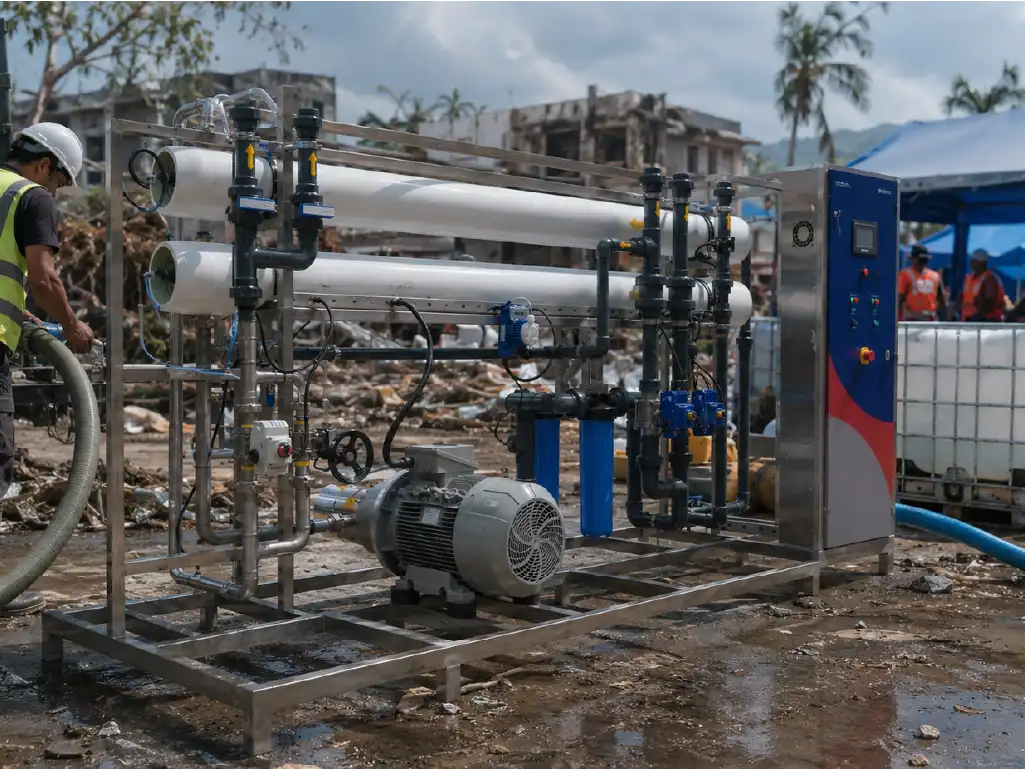
These systems reduce dependence on centralized infrastructure and can be transported directly to the area where they are needed. Especially after a disaster, when network lines are damaged, storage tanks are contaminated or the reliability of the drinking water source is lost, a Mobile Water Treatment Unit becomes a rapid alternative.
The use of a Mobile Water Treatment Unit may not be limited only to drinking water production. In some scenarios, treated water is also required for cleaning, food preparation, medical triage, temporary shelter areas, hygiene points and the daily water needs of field personnel.
Therefore, system capacity should be determined by considering the number of users, daily water consumption, raw water quality and operation duration. Compact systems may be sufficient for short term interventions, while higher capacity and automation supported solutions may be preferred for long term field operations. When planned correctly, a Mobile Water Treatment Unit provides reliable and sustainable water supply both in disaster management and temporary operations.
Disaster and crisis regions
After disasters such as earthquakes, floods, fires, storms and landslides, water infrastructure may be seriously damaged. Pipelines may break, storage tanks may become contaminated, power outages may disable pumps and existing water sources may carry microbiological risks. In such cases, a Mobile Water Treatment Unit can be transported to the disaster area and treat raw water in a controlled manner.
Especially in crowded temporary shelter areas, regularly meeting water demand is critical for maintaining hygiene conditions and reducing the risk of outbreaks. From the perspective of disaster management, a Mobile Water Treatment Unit is strategic equipment that increases emergency response capacity.
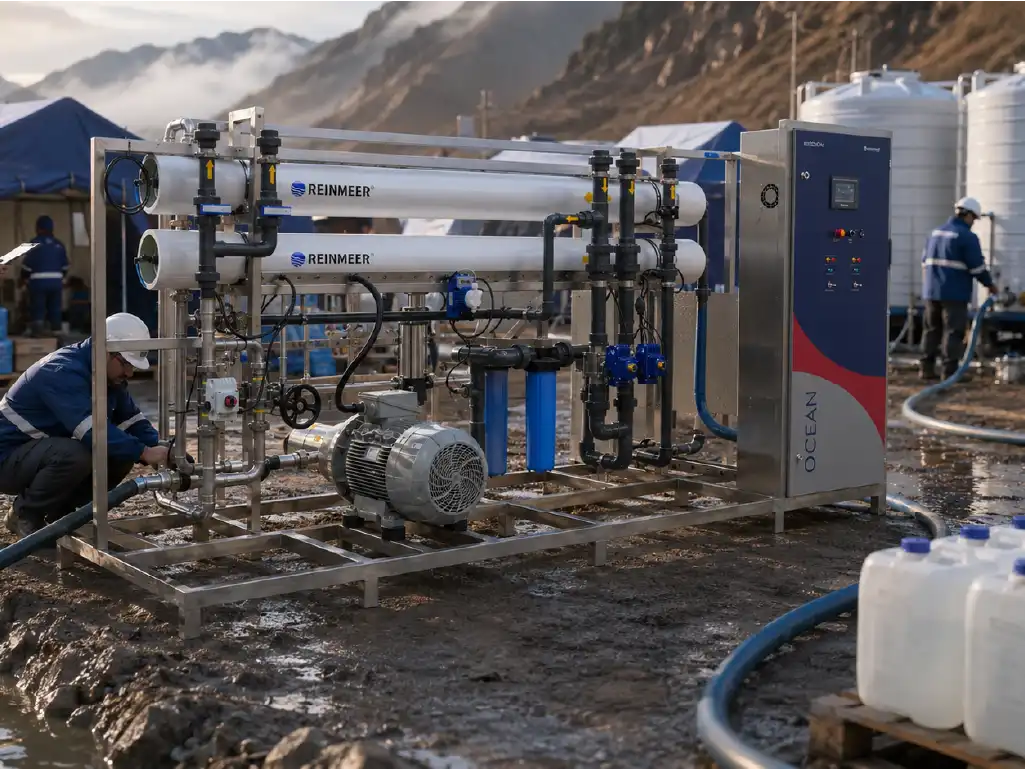
In crisis areas, the most important issue is that the system can be installed quickly and operated safely. Time loss after a disaster may increase water related health risks. For this reason, a Mobile Water Treatment Unit can be prepared on an easily transportable chassis, container structure, skid mounted design or trailer type platform.
After the system reaches the field, its connections must be completed, raw water inlet must be provided, it must be connected to the energy source and the outlet water quality must be tested. In order for the operation team to read the system easily, pressure gauges, flow meters, control panels, alarm systems and sampling points should be positioned clearly. In this way, a Mobile Water Treatment Unit becomes not a complex technical burden during a crisis, but a manageable water safety solution.
Temporary field, camp and areas without infrastructure
In fields without infrastructure, reliable water supply often determines operational continuity. Construction projects, mining sites, energy projects, oil and gas operations, military camps and temporary settlements may not be connected to a fixed drinking water network.
In these areas, transporting water by tanker may seem like a short term solution, but it can create risks in terms of cost, logistics, continuity and quality control. A Mobile Water Treatment Unit can reduce dependence on externally transported water by enabling the use of raw water sources available on site. As a result, a more controlled, traceable and sustainable water management system can be established for operation teams.
In temporary camp and field areas, water demand may vary throughout the day. The number of employees, shift schedule, climate conditions, accommodation period and hygiene requirements directly affect capacity calculation. Therefore, when choosing a Mobile Water Treatment Unit, it is not enough to look only at nominal production capacity.
Daily peak consumption, storage volume, energy continuity, maintenance interval and spare consumables should also be planned. Since technical service access may be limited in remote regions, the system should be user friendly, filter replacements should be easy and basic fault warnings should be clear. This approach makes the use of a Mobile Water Treatment Unit more efficient and reliable in the field.
Which Technical Features Are Important in Emergency Systems?
Water treatment systems to be used in emergencies have different priorities than conventional fixed plants. In a fixed plant, there may be a large area, permanent infrastructure and continuous technical personnel. However, in emergencies, the system must be much more practical to transport, install, operate and monitor.
Therefore, in the design of a Mobile Water Treatment Unit, features such as compact structure, durable equipment selection, modular process configuration, low maintenance requirements and the ability to operate with different power sources come to the forefront. Since field conditions are not always ideal, the system must be able to adapt to challenging environmental conditions.
From a technical perspective, a successful Mobile Water Treatment Unit should include the right process combination according to the character of the raw water. Suspended solids, turbidity, organic load, iron, manganese, hardness, salinity, bacteria, viruses and chemical contaminants require different treatment technologies.
Therefore, units such as multimedia filtration, activated carbon filtration, cartridge filtration, ultrafiltration, reverse osmosis, UV disinfection, chlorination or remineralization can be included in the system according to need. Especially when drinking water is the target, it is not enough for the water to look clear. A Mobile Water Treatment Unit should be planned in a way that can control outlet water quality physically, chemically and microbiologically.
Rapid installation and portable structure
Rapid installation is one of the most critical features of emergency water treatment systems. A Mobile Water Treatment Unit should be ready to operate when it arrives on site without requiring complex construction work. Container type solutions protect equipment from outdoor conditions and provide ease of transport. Skid mounted systems provide rapid placement advantages in more compact areas.
Mobile systems installed on trailers can be transported to different points in a short time. Regardless of which structure is preferred, the connection points must be understandable, the electrical and water inlet outlet connections must be positioned according to the field and the operator must be able to run the system safely.
Portable structure does not only mean physical mobility. It also includes the ability of the system to be reconfigured for different tasks. For example, while well water may be treated in one field, surface water or seawater may need to be treated in another location. In this case, a Mobile Water Treatment Unit should be able to adapt to different raw water qualities thanks to process flexibility.
Replaceable filter modules, adjustable dosing systems, automation parameters that can be regulated according to the field and outlet water targets that can be determined according to needs increase the value of the system. For this reason, when selecting a Mobile Water Treatment Unit, not only today’s need but also different scenarios that may be encountered in the future should be considered.
Compatibility with different raw water sources
Raw water sources that may be used in emergencies do not always have the same quality. In one region, well water may be accessible, while in another region, river, lake, dam, seawater or rainwater storage sources may be used. Each of these sources creates a different treatment need. While seawater requires reverse osmosis and high pressure systems due to high salinity, surface waters may carry high turbidity and microbiological risks. In well waters, hardness, iron, manganese or conductivity problems may be observed. Therefore, a Mobile Water Treatment Unit must operate with the right process according to raw water analysis.
Raw water compatibility is as important as capacity in system design. If pretreatment is insufficient, poor quality raw water may cause membrane clogging, shortened filter life, reduced disinfection efficiency and fluctuations in outlet water quality. For this reason, a Mobile Water Treatment Unit should include suitable filtration stages, chemical dosing points, pressure control equipment and protection sensors.
In systems using reverse osmosis, membrane protection, antiscalant dosing, cartridge filtration and regular flushing procedures are important. In seawater treatment scenarios, corrosion resistant equipment, high pressure pump, energy efficiency and mineral balance should also be evaluated. A properly configured Mobile Water Treatment Unit delivers more stable performance under variable source conditions.
| Scenario | Possible Raw Water Source | Main Treatment Need | System Priority |
|---|---|---|---|
| Disaster area | Network water, well water, tanker water, surface water | Filtration, disinfection, quality monitoring | Rapid commissioning |
| Temporary camp | Well water, storage water, tanker water | Hardness control, microbiological safety | Continuous and practical use |
| Coastal operation | Seawater | Reverse osmosis, desalination, remineralization | High corrosion resistance |
| Industrial field | Well water or process water | Particle removal, conductivity control | Capacity and easy maintenance |
Which Controls Should Be Performed for Safe Drinking Water?
The fact that water has been treated does not automatically mean that it is drinkable. For safe drinking water, the system must operate correctly, outlet water must be monitored regularly and quality parameters must be recorded. When using a Mobile Water Treatment Unit, it is important to control the water in terms of turbidity, pH, conductivity, free chlorine, total dissolved solids, microbiological suitability and, when necessary, chemical parameters.
Even if field conditions are challenging in emergencies, basic tests should not be neglected. Water that appears visually clear may still carry microbiological or chemical risks.
The quality control process should begin with raw water analysis and continue until outlet water verification. Correct treatment performance cannot be expected without knowing the character of the water entering the system. Therefore, before commissioning a Mobile Water Treatment Unit, a raw water sample should be taken if possible and basic parameters should be evaluated.
After commissioning, the first produced water should be checked and should be sent to storage or distribution only after stable quality is reached. If the system will operate for a long time, a daily testing plan should be created and filter pressure differences, membrane performance, disinfection level and water consumption should be monitored regularly. This approach helps maintain the performance of a Mobile Water Treatment Unit reliably.
Filtration and disinfection processes
Filtration is one of the first and most important stages of the treatment process. Advanced treatment equipment cannot be expected to work efficiently without removing suspended solids, sediment, sand, rust, organic matter and turbidity.
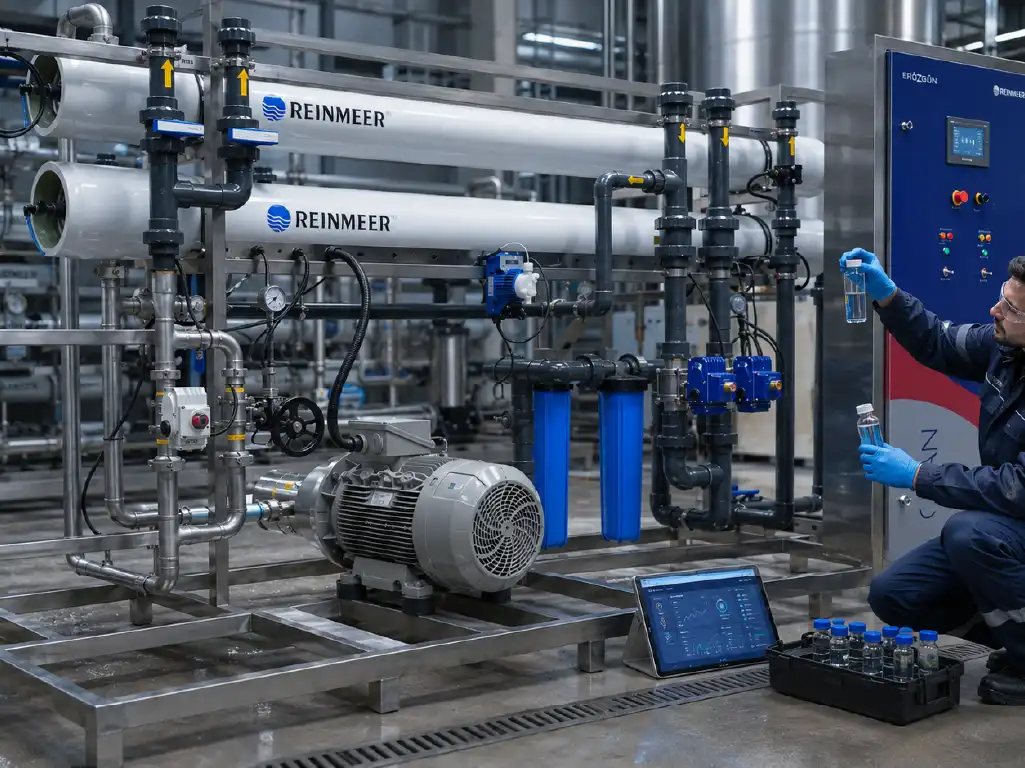
A Mobile Water Treatment Unit may include multimedia filters, activated carbon filters, bag filters, cartridge filters or ultrafiltration systems. Activated carbon plays an important role in removing taste, odor, organic compounds and chlorine, while cartridge filters perform sensitive particle retention before membranes. Ultrafiltration can provide a stronger barrier in sources with high microbiological load such as surface waters.
Disinfection is indispensable for the microbiological safety of water. Chlorination, UV disinfection, ozonation or suitable dosing systems can be preferred according to the intended use of the water. In emergencies, disinfection must be easy to monitor and sustainable. If a UV system is used inside a Mobile Water Treatment Unit, lamp operating status, UV transmittance and flow rate should be checked.
If chlorination is applied, contact time, dosage amount and residual chlorine level should be measured regularly. If the water has very low mineral content after reverse osmosis, remineralization may also be required for drinking water balance. Therefore, a Mobile Water Treatment Unit is not just a single piece of equipment, but a complete system consisting of compatible treatment and control stages working together.
Field tests and quality monitoring
Field tests directly affect the reliability of mobile treatment systems. When every Mobile Water Treatment Unit is commissioned, basic testing procedures should be determined. These procedures should clearly define raw water and product water measurements, sampling frequency, acceptance limits, recording method and responsible personnel.
Parameters such as pH, conductivity, TDS, turbidity, free chlorine, temperature and flow rate can be measured quickly in the field. For microbiological tests, proper sampling and laboratory verification may be required. Especially when water is supplied to a large population in disaster areas, the quality monitoring process should be carried out more carefully.
Quality monitoring is not only about performing tests. The measured values must be interpreted, trends must be tracked and action must be taken in abnormal situations. For example, a sudden increase in conductivity may indicate a problem with membrane performance. An increase in pressure difference may indicate filter clogging. A decrease in disinfectant level may create a risk in terms of microbiological safety.
Therefore, it is a major advantage for a Mobile Water Treatment Unit to include alarms, sensors, automatic shutdown, sampling valves and a recording system. Operator training is also critical at this point. Even the best equipment may fail to provide the desired safety if it is not used correctly. For this reason, the installation of a Mobile Water Treatment Unit should be handled together with technical training and a quality tracking plan.
What Should Be Considered When Selecting a Mobile Treatment System for Emergencies?
Choosing the right system makes a major difference in emergencies in terms of time, cost and safety. When selecting a Mobile Water Treatment Unit, the first step is needs analysis. Daily water demand, number of users, raw water source, intended use of the water, field conditions, energy access and operation duration must be determined. If drinking water production is the goal, it is not enough for the system to perform only particle removal.
Microbiological safety, chemical suitability and, when necessary, mineral balance should be evaluated together. In addition, the road conditions where the system will be transported, the size of the installation area, climate conditions and access to maintenance personnel should also be considered.
Another important issue is that the system can operate sustainably under real field conditions. A Mobile Water Treatment Unit may include advanced technology, but if consumables are difficult to find, operators cannot understand the system or maintenance procedures are complex, efficiency may decrease during a crisis. Therefore, practicality, durability and ease of service should be prioritized in design.
Filter replacements, chemical tank refills, membrane washing procedures, pump checks and sensor calibrations should be as accessible as possible. In long term operations, a spare parts plan, consumables list and maintenance schedule should be prepared in advance. In this way, a Mobile Water Treatment Unit can provide reliable performance not only on the first day, but throughout the entire operation.
FAQ
Can a mobile water treatment unit be used in a disaster area?
Yes, a Mobile Water Treatment Unit can be used in disaster areas, and these areas are among the most critical use scenarios for mobile treatment systems. After an earthquake, flood, fire or infrastructure failure, the existing drinking water network may lose its reliability.
In this case, the system can be connected to a suitable raw water source and support safe water production through filtration, disinfection and, if necessary, reverse osmosis processes. However, a Mobile Water Treatment Unit to be used in a disaster area must be selected according to raw water analysis, capacity needs and field conditions. In addition, the produced water must be tested regularly and local health authority guidance must be followed.
How long does it take to commission an emergency treatment system?
The commissioning time varies depending on the system type, capacity, field preparation, energy connection and raw water source. A compact Mobile Water Treatment Unit can be operated in a short time if suitable connection points are ready. In container type high capacity systems, more comprehensive preparation may be required for placement, piping, electrical connection, initial flushing, disinfection and quality tests.
The most accurate approach in emergency planning is to keep the system ready before a crisis, determine connection equipment in advance and train operators. In this way, when the Mobile Water Treatment Unit reaches the field, time loss can be minimized.
Can a mobile treatment system convert seawater into drinking water?
Yes, a properly designed Mobile Water Treatment Unit can be used to convert seawater into water close to drinking water quality. However, for this purpose, the system must include seawater reverse osmosis technology, a high pressure pump, suitable pretreatment, corrosion resistant equipment and outlet water quality control. Since seawater contains high salinity, simple filtration is not sufficient.
After reverse osmosis, mineral balance and disinfection safety should also be evaluated. Therefore, if seawater treatment is targeted, a Mobile Water Treatment Unit must be designed with engineering suitable for seawater conditions, unlike standard freshwater systems.
Conclusion
A Mobile Water Treatment Unit offers a strategic solution in scenarios where access to clean water is interrupted or infrastructure is insufficient. Properly designed mobile systems for disaster areas, temporary camps, remote field operations, coastal facilities, industrial projects and emergency response points make safe water production faster and more manageable.
However, for a successful result, it is not enough for the system to be portable. Raw water compatibility, process selection, filtration, disinfection, field tests, quality monitoring, ease of maintenance and operator training must be planned together. Thanks to this integrated approach, a Mobile Water Treatment Unit creates a reliable water source during crises and provides sustainable performance in long term field operations.
Water safety is one of the most critical topics in emergency planning, and with the right engineering approach, this risk can become manageable. Tuna Desalinasyon is an experienced solution partner that develops treatment solutions suitable for different raw water sources and field needs, bringing a technical perspective to your projects. Whether you need disaster preparedness, temporary field installation, seawater treatment, drinking water production or a mobile system with a special capacity, determining the correct process is extremely important.
When selecting the right Mobile Water Treatment Unit for your needs, capacity, raw water analysis, energy conditions, portability, maintenance planning and quality monitoring processes should be evaluated together. If you are looking for a reliable, scalable and field appropriate solution for your project, you can contact Tuna Desalinasyon through tunadesalination.com and evaluate system options suitable for your technical requirements. A properly planned Mobile Water Treatment Unit supports operational safety not only in emergencies but in every field where water is critical.