
When Should an SWRO Membrane Undergo CIP Cleaning? Performance Criteria Guide
Eylül 9, 2026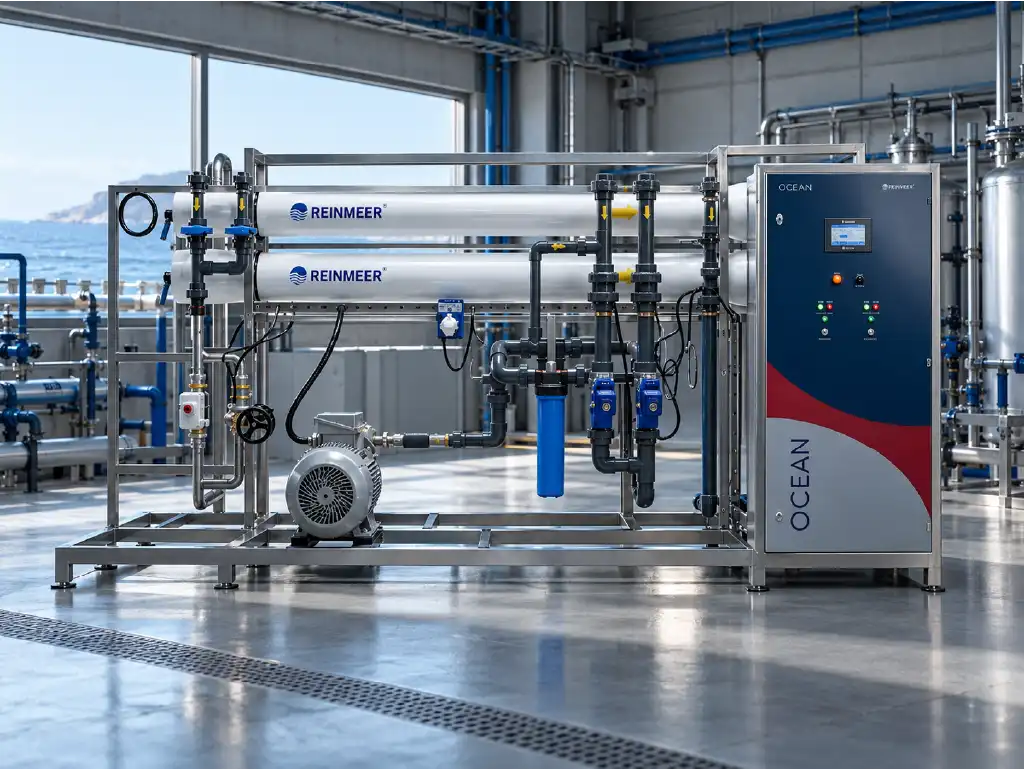
Boron removal from seawater cannot be verified by low product water conductivity alone. An SWRO plant can remove salts effectively while leaving boron above the project target. A major reason is that boron occurs substantially as uncharged boric acid under natural seawater conditions. Reliable treatment therefore combines feedwater analysis, suitable membrane selection, seasonal operating projections and, where necessary, a second pass RO system.
Start by defining the required quality at the point where water will actually be delivered. Drinking water, industrial process water and irrigation water may require different acceptance criteria. Reinmeer Water Treatment Systems provides seawater reverse osmosis solutions evaluated around project capacity and water analysis. A documented boron target should form part of that design basis.
Why Does Boron Require Separate Assessment in SWRO Design?
Boron behaves differently from sodium chloride during membrane separation. The salt rejection stated on a membrane data sheet is not its boron rejection. For boron removal from seawater, reviewing only TDS and conductivity leaves an important quality question unanswered. The design should identify feed boron, required product concentration and the operating conditions under which that requirement must be maintained.
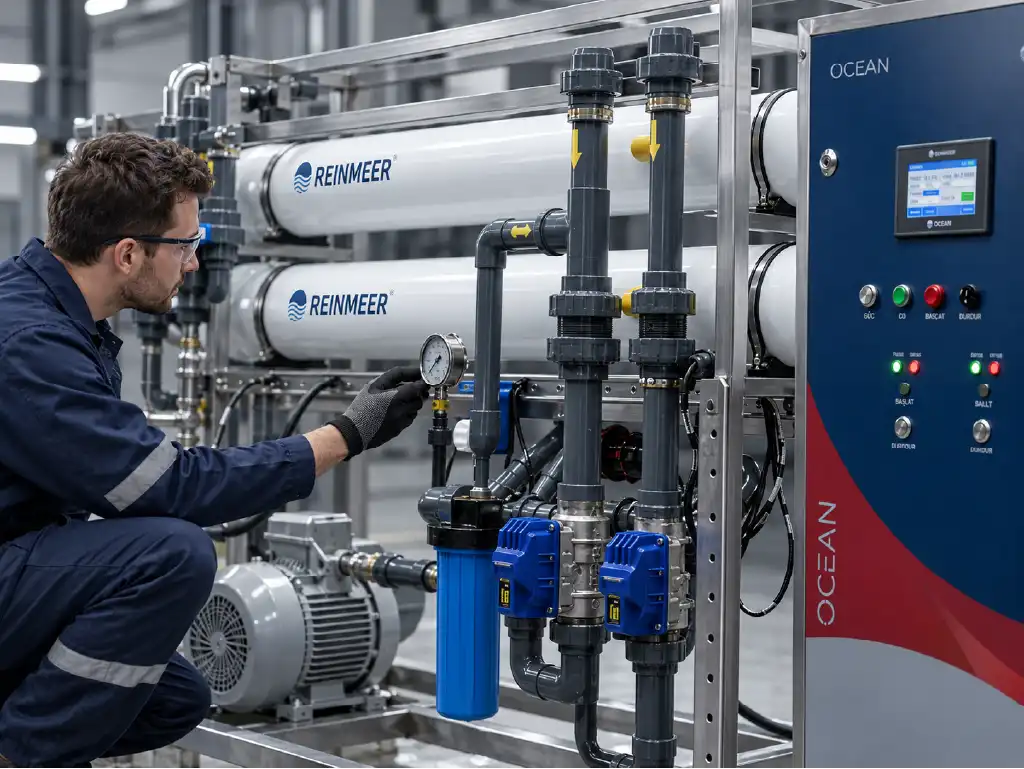
Requirements for boron in drinking water should be checked against current local legislation, authority requirements and the project specification. A concentration used in an older research study is not automatically the applicable legal limit. Acceptance should also distinguish membrane permeate from finished water after blending, remineralization and disinfection. A favourable sample taken upstream may not represent the water supplied to users.
Membrane behaviour of boric acid
Boron exists in water through a pH-dependent balance between boric acid and borate species. Uncharged boric acid can pass through RO membranes more readily than ionic borate. Raising pH can increase the borate fraction and improve rejection under suitable conditions. This does not establish a universal removal percentage: membrane characteristics, temperature, water composition and operating conditions still matter.
The U.S. Bureau of Reclamation’s research on boron rejection by RO membranes explains the importance of speciation and operating conditions. For boron removal from seawater, this evidence should inform manufacturer projections and site verification. The practical design question is the predicted product concentration under actual feed conditions, rather than an isolated catalogue percentage.
How should boric acid membrane behaviour be assessed technically?
Characterize feed boron, pH, temperature, salinity, alkalinity and hardness. Review membrane-specific boron data separately, recording the associated pressure, temperature, pH and recovery. Values obtained under different test conditions should not be treated as directly equivalent. Confirm that the manufacturer’s calculation method supports the selected membrane and the water matrix being modelled.
A basic apparent rejection calculation is R = 100 × (1 − Cp/Cf), where Cf and Cp are simultaneous feed and permeate boron concentrations. Use matching units and the same reporting basis, normally elemental boron. Mixing boric acid concentration with elemental boron concentration gives a misleading result. Apparent rejection calculated against the system inlet is also different from an individual element’s standardized test performance.
Measurement methods, records and acceptance criteria
Total boron should be measured using a validated laboratory method with a reporting limit suitable for the target concentration. ICP-based methods may be appropriate; the laboratory must confirm suitability for the sample matrix and required sensitivity. EPA Method 200.7 addresses laboratory materials relevant to boron analysis. Follow laboratory instructions for containers and preservation, avoiding contamination from borosilicate glass.
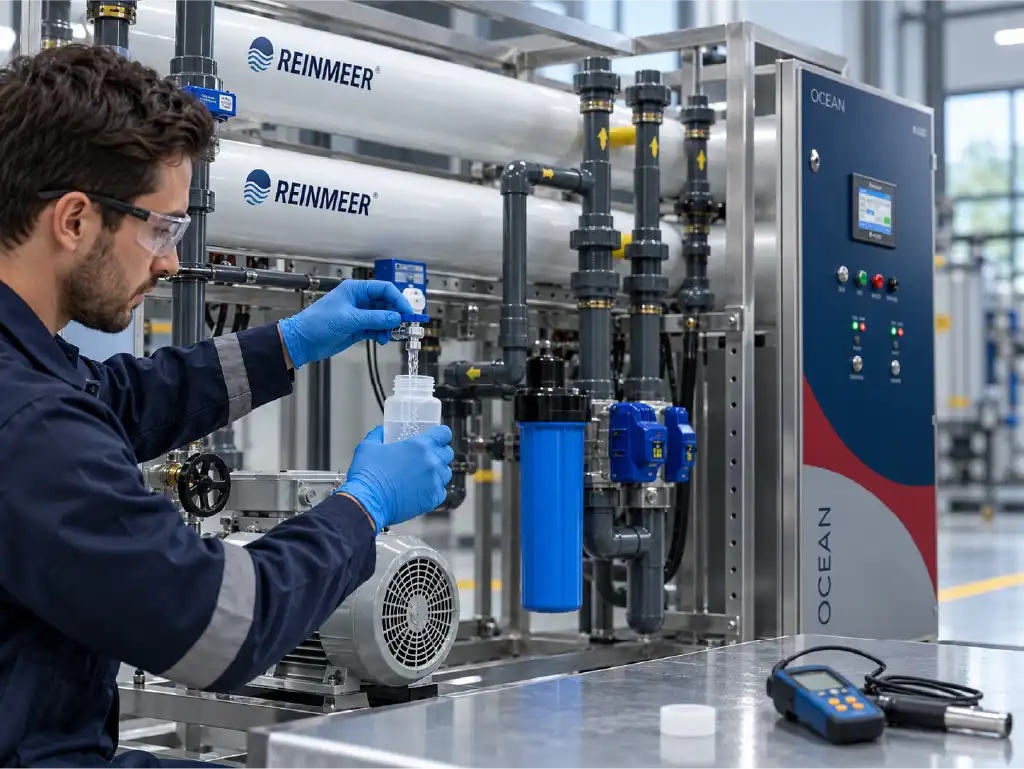
Records for boron removal from seawater should connect each result with sampling location, date, operating duration, temperature, pH, flow and pressure. Define the acceptance point, analytical uncertainty and reporting limit before testing. Collect representative simultaneous samples after stable operation has been established, rather than during an unexplained startup fluctuation.
Effects of temperature and pH changes on boron rejection
Increasing temperature can increase boron passage in many SWRO applications, making the product quality requirement harder to maintain. A plant that meets its target in winter therefore does not automatically demonstrate summer compliance. Increasing pH can support borate formation, but should not be assumed to compensate completely for every temperature effect.
For boron removal from seawater, assess the maximum seasonal temperature alongside changes in feed boron and membrane service condition. Low temperature also requires attention because it can challenge pumping pressure and production capacity. Quality and hydraulic capacity may therefore have different limiting scenarios; both need to appear in the design review.
How should temperature and pH effects be assessed technically?
Prepare low, normal and high temperature cases, comparing feed pH, membrane model, recovery and predicted product boron. Include manufacturer-supported assumptions representing membrane performance over the intended operating period. Boron removal from seawater should be evaluated across these cases instead of being justified by one favourable projection.
Check the calibration and location of the pH measurement. A sensor immediately after chemical injection may encounter incomplete mixing and fail to represent membrane feed conditions. Instrument temperature compensation does not remove the temperature dependence of the water’s chemical equilibrium. Record measured pH together with sample temperature and maintain a consistent measurement procedure.
Risk indicators, corrective actions and verification
Increasing product boron, unstable pH, a dosing pump approaching its capacity limit and changing recovery warrant investigation. First confirm the laboratory result and sampling conditions. Then review sensor calibration, dosing delivery, mixing and membrane operating data. Increasing chemical dosage without identifying the cause can mask a different problem.
Expert note: Conductivity is not a substitute for boron analysis. Verify boron removal from seawater with direct measurement, using conductivity, flow and pressure to support diagnosis. After an adjustment, allow stable operation, repeat sampling and compare results against a clearly documented baseline.
How Can the Target Be Achieved? Designing Boron Removal from Seawater
The main options combine suitable first pass membranes, second pass treatment and controlled pH adjustment. The right configuration for boron removal from seawater depends on feed analysis and finished water requirements. The following comparison identifies the evidence needed to evaluate each option.
| Option | Main assessment | Verification |
|---|---|---|
| Single pass SWRO | Seasonal boron performance | Finished water analysis |
| Full second pass | Capacity and overall recovery | Two-pass mass balance |
| Partial second pass | Bypass and blending ratio | Post-blending analysis |
| pH optimization | Membrane limits and scaling | pH, boron and operating trends |
Second pass RO design
A second pass RO system treats first pass permeate in a separate RO unit. It differs from sending concentrate to another membrane stage within the same pass. Its feed has lower salinity, allowing different membranes and operating pressures to be considered. Selection must address boron and the remaining water quality requirements together.
A full second pass treats all first pass permeate. A partial second pass treats a selected portion before blending it with suitable bypass water. Partial treatment supports boron removal from seawater only when the final blend meets the target throughout the design envelope. Changes in bypass quality may require adjustment of the blending ratio rather than a permanently fixed valve position.
How should second pass RO design be assessed technically?
Size the unit around required finished water flow as well as second pass feed capacity. Account separately for recovery in each pass, the treated fraction and any recycle streams. If concentrate recycling is considered, calculate boron and salt accumulation through a complete mass balance. For boron removal from seawater, production losses and chemical consumption should remain visible in the comparison.
Consider an illustrative blend with bypass boron of 0.80 mg/L, second pass permeate of 0.10 mg/L and a target of 0.30 mg/L. If x is the fraction of finished flow supplied by second pass permeate, Cblend = x × 0.10 + (1 − x) × 0.80. This gives a minimum x of approximately 71.4%. It is a finished water fraction, not the fraction entering the second pass; recovery must also be included. These assumed values are neither regulatory limits nor Reinmeer performance guarantees.
Measurement methods, records and acceptance criteria
Identify separate sampling points for first pass permeate, second pass feed, second pass permeate and the final blend. Pair each concentration with its corresponding flow. Test at the production capacity and operating conditions defined in the acceptance protocol. A satisfactory low-flow result alone should not establish acceptance at the full design duty.
The protocol for boron removal from seawater should also define alarms, repeat testing and management of off-target water. Diversion or shutdown functions depend on project requirements. Required control functions can be discussed alongside Reinmeer’s water treatment technology and safety approach, with their final scope documented in the project specification.
pH optimization and membrane selection
The relationship between pH and boron removal should not be managed through arbitrary dosage increases. Alkalization before the second pass is commonly considered, but residual hardness, alkalinity and other constituents still require scaling assessment. Low conductivity does not prove that high-pH operation is free from precipitation risk.
Review RO membrane boron rejection alongside continuous operating pH limits, temperature limits and manufacturer design guidance. A permitted cleaning pH range is not a continuous operating range. For boron removal from seawater, a high-rejection membrane should be selected through a system-level comparison of quality, capacity and operating cost.
How should pH optimization and membrane selection be assessed technically?
Compare alternative membranes under equivalent feed conditions and the same finished water requirement. Improving first pass quality can reduce second pass demand in some projects, while changing pressure or membrane area. Evaluate energy, chemicals, maintenance and replacement costs alongside equipment price. The lowest purchase price is not sufficient evidence of the best treatment arrangement.
Chemical demand should consider buffering capacity and dissolved carbon dioxide as well as the pH target. Include dosing equipment, mixing requirements and measurement locations in the design. High-pH conditions selected for boron removal from seawater must also be followed by appropriate finished water pH adjustment and conditioning for the intended use.
Risk indicators, corrective actions and verification
Review rising differential pressure, declining normalized permeate flow, unexpected chemical consumption and changing product boron together. None provides a definitive diagnosis alone. Interrupted dosing, a faulty sensor and membrane performance changes call for different responses. Corrective chemical and maintenance procedures must remain within manufacturer limits.
After intervention, verify pH, boron concentration and hydraulic performance again. Where membrane cleaning is performed, retain the procedure record and compare subsequent performance with the baseline. This makes boron removal from seawater an ongoing measurable operating requirement, rather than a result demonstrated only during commissioning.
Connect Design Assumptions with Operating Verification
Boron removal from seawater starts with membrane selection, but reliable delivery also requires suitable second pass capacity, controlled dosing and meaningful analysis. Verify the target at real production flow and the final delivery point, including seasonal conditions. Linking projections, acceptance tests and routine operating records gives the owner a practical basis for managing water quality.
Frequently Asked Questions
Does SWRO remove all boron?
Complete removal should not be assumed. Residual boron depends on feed concentration, membrane selection, temperature, pH and operation. Assess success against the specified concentration using suitable laboratory analysis.
Does low TDS mean low boron?
No. TDS and conductivity describe overall ionic loading, while boron requires separate assessment. Where a project specifies a boron target, measure boron directly rather than relying on conductivity.
Is a second pass always necessary?
No. Suitable first pass membranes may meet some targets. For boron removal from seawater, determine second pass demand through feed analysis, worst-case projections and verification against the required finished quality.
Is increasing pH enough?
Not necessarily. It can improve rejection, but membrane compatibility, scaling, dosing control and final water pH still require evaluation. Operate within the project-specific validated range.
Where should boron samples be collected?
Select feed, pass outlet and finished water points according to the layout. Post-blending sampling is especially important for partial second pass systems. Obtain container, preservation and transport instructions from the laboratory beforehand.
Discuss Your Boron Control Requirements with Reinmeer
If you are planning a desalination plant or investigating an existing SWRO system, start with a recent feedwater analysis and a clear finished water specification. For boron removal from seawater, sharing daily demand, seasonal temperatures, existing membrane details and intended water use makes the technical review more useful than stating nominal equipment capacity alone.
Explore Reinmeer’s seawater treatment solutions and contact the Reinmeer team to discuss the assessment needed for first pass selection, second pass capacity, pH control and acceptance testing. Existing plants benefit from current laboratory reports and operating records that help identify the source of a quality deviation. For new investments, defining the boron target, net production requirement and site conditions before requesting quotations allows alternatives to be compared on a consistent basis. The resulting discussion can support technical advice, a site assessment or a project proposal built around measurable water quality objectives.
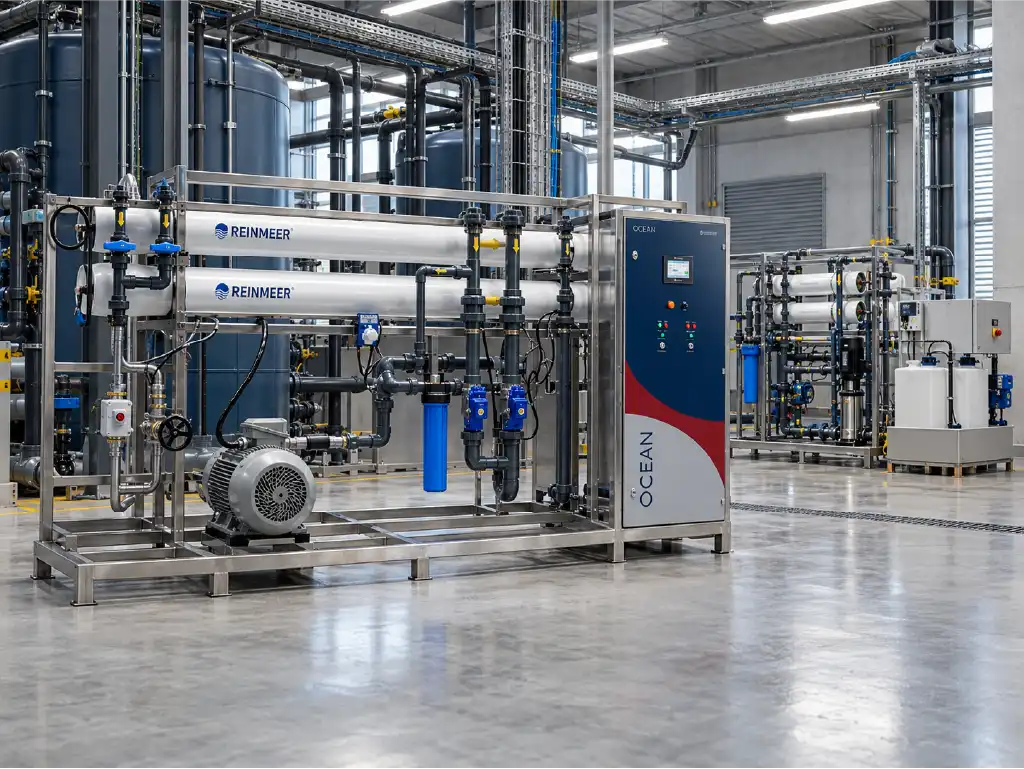
The images are illustrative and were created using artificial intelligence.