

In Which Scenarios Is a Mobile Water Treatment Unit Necessary?
Mayıs 27, 2026
SWRO Pretreatment Selection: A Membrane Protection Guide for Seawater Reverse Osmosis Systems
Haziran 15, 2026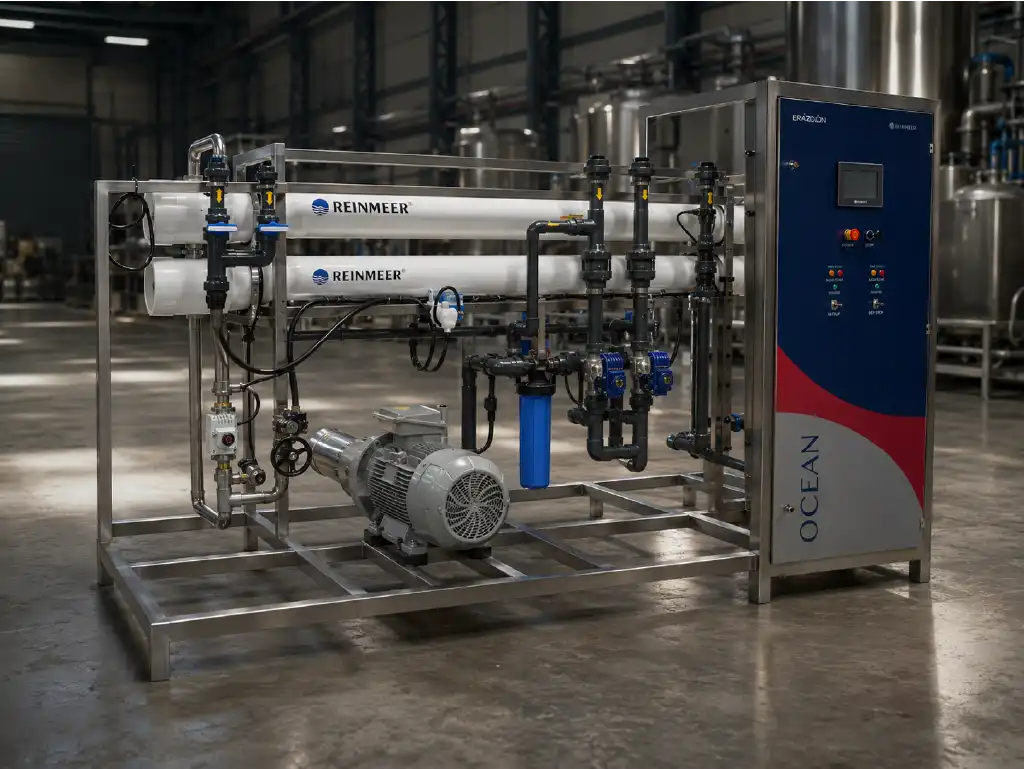
Seawater desalination capacity calculation is the foundation of selecting the right system for hotels, residential complexes, villas, marinas, vessels, offshore platforms and industrial facilities in coastal regions. Evaluating a system only by asking “how many tons of water does it produce per day?” is often not sufficient. Daily consumption, instantaneous peak flow, seasonal intensity, raw water quality, storage volume, production time and reserve capacity should all be considered together.
In seawater reverse osmosis systems, capacity planning is a critical engineering step for both uninterrupted water supply and investment cost control. If the capacity is selected too low, the risk of water shortage occurs; if it is selected larger than necessary, investment and operating costs increase. Therefore, seawater desalination capacity calculation should be carried out according to the actual usage profile.
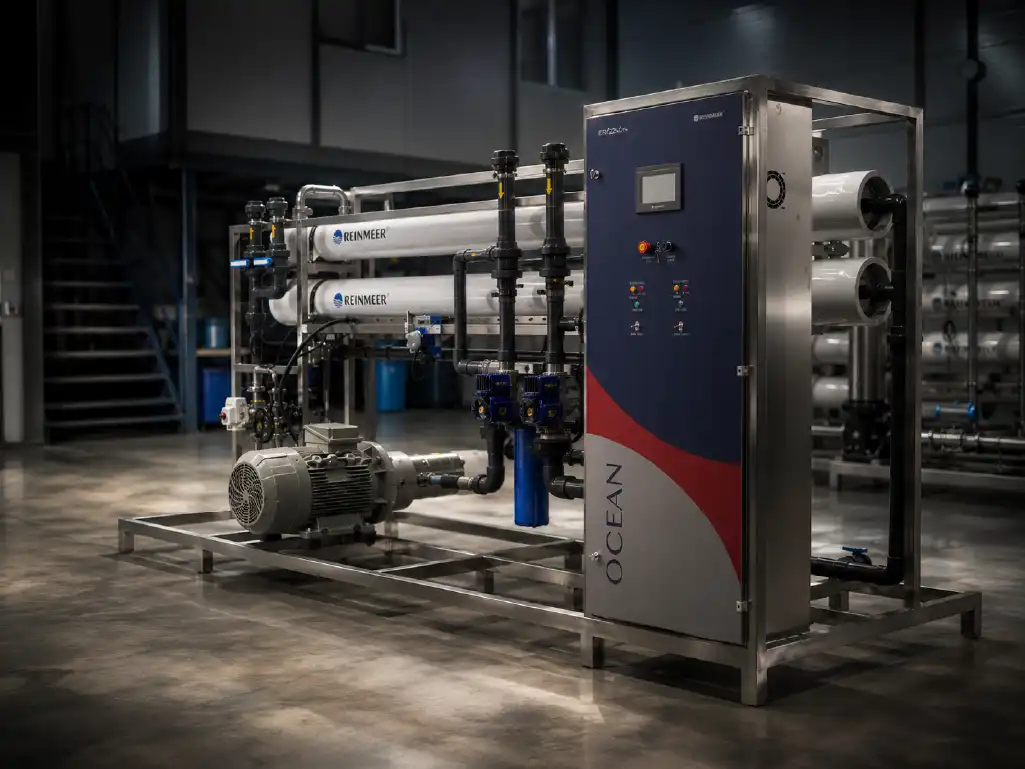
Tuna Desalination seawater desalination systems can be planned according to different scales of water demand with project-based capacity analysis, correct equipment selection and an after-sales support approach.
Why Should Seawater Desalination Capacity Calculation Be Done Correctly?
One of the most common mistakes when selecting a seawater desalination system is considering only the average daily consumption. However, under real operating conditions, water demand does not remain constant throughout the day. Usage points such as morning showers, kitchen preparation, laundry operation, pool make-up water, landscape irrigation, production line cleaning or crew shift changes on vessels may become concentrated at certain hours.
For this reason, seawater desalination capacity calculation should cover not only average consumption but also the most intensive operating moments of the facility. Even if the system has enough capacity to meet the total daily demand, pressure may drop during peak hours, some usage points may not receive enough water or the tank level may decrease rapidly if the storage tank and distribution line are not designed correctly.
Accurate capacity calculation evaluates the production flow rate of the desalination unit, clean water tank, raw water tank, booster system, energy infrastructure, pretreatment capacity and automation scenarios together. This approach enables the installation of a system that is prepared for capacity increases and seasonal changes.
The Difference Between Daily Consumption and Instantaneous Peak Flow
Daily consumption refers to the total amount of water a facility needs within 24 hours. For example, a hotel may have a total consumption of 120 m³/day. However, this value does not mean that water use is distributed evenly throughout the day. When shower, kitchen, cleaning and laundry use increase at the same time in the morning and evening hours, instantaneous flow demand can be much higher.
Instantaneous peak flow is the highest water flow expected from the system within a specific time period. These two concepts should not be confused when calculating the flow rate of a desalination system. An SWRO system generally operates as a continuous production system, while peak flow is mostly handled by the storage tank and distribution system. Therefore, daily production capacity and tank volume are two separate design parameters that complement each other.
With a simple approach, daily demand can be calculated based on the number of users and unit consumption values. Then, storage demand is analyzed by identifying intensive usage hours. At this stage, it is important to evaluate when the facility uses water, how many hours of production are possible, the possibility of power outages and how much reserve water is required during maintenance.
Consumption Profiles in Hotels, Residential Complexes, Villas and Industrial Facilities
Every facility has a different water usage profile. In hotels, occupancy rate, restaurant capacity, spa areas, pools, laundry and landscape irrigation are important determining factors. Due to increased occupancy and outdoor area use during summer, the daily water consumption calculation process must be carried out with seasonal scenarios.
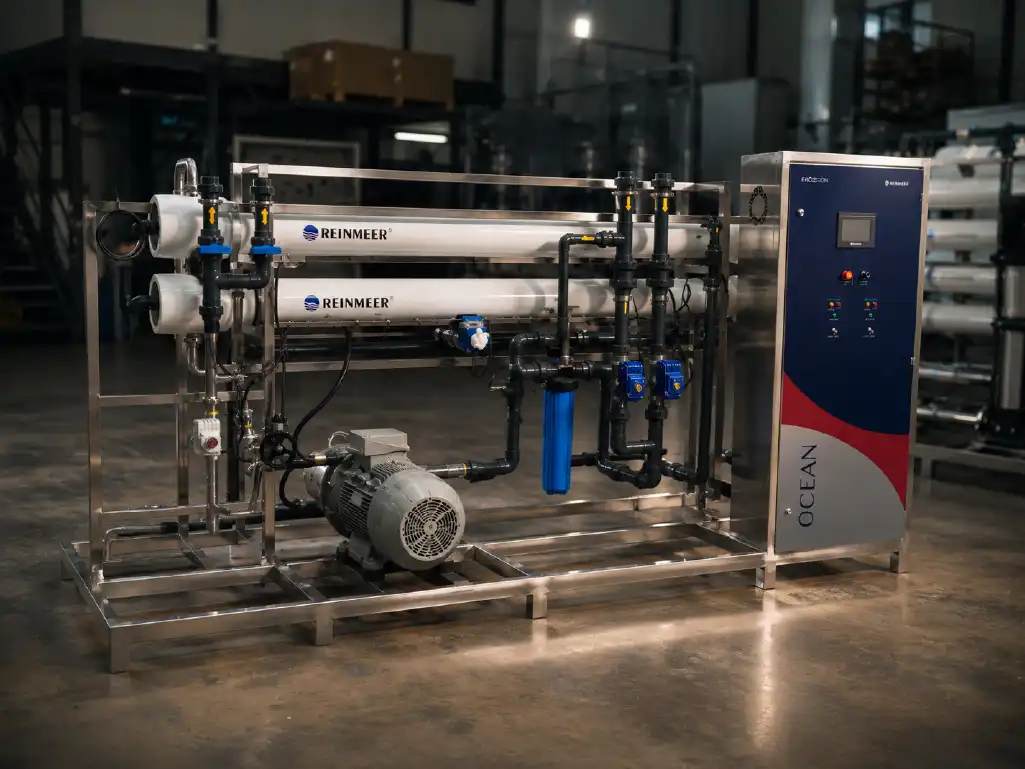
In residential complexes and collective housing projects, consumption is mostly concentrated in the morning and evening hours. In villa projects, even if the number of users appears low, pools, garden irrigation, guest use and high summer occupancy can significantly affect capacity. Therefore, even at villa scale, seawater desalination capacity calculation should not be based only on the number of people.
In industrial facilities, the consumption profile depends on the production process. While water demand may be constant throughout the day in some facilities, short-term high consumption may occur during CIP cleaning, cooling, boiler feed water, product preparation or shift transitions in some applications. In these areas, seawater desalination capacity calculation should be evaluated together with process engineering data.
| Application Area | Main Factors Affecting Capacity | Planning Note |
|---|---|---|
| Hotel and resort | Occupancy rate, number of rooms, kitchen, laundry, pool, landscape | Seasonal intensity and peak hours should be calculated together. |
| Residential complex and collective housing | Number of apartments, user density, common areas, irrigation | The storage tank should be selected to cover morning and evening peaks. |
| Villa | Number of users, pool, garden, summer use, guest intensity | Reserve capacity and tank volume are also important in small systems. |
| Industrial facility | Process demand, shift schedule, washing, cooling, production continuity | The desalination system flow calculation should be verified with process data. |
| Vessel and offshore platform | Number of crew members, operation duration, limited space, energy infrastructure | Compact design, reliable production and service accessibility are priorities. |
Which Data Is Used When Calculating SWRO Capacity?
Seawater desalination capacity calculation is not just the mechanical application of a single formula. Seawater salinity, temperature, turbidity, suspended solids, organic load, raw water intake point, membrane selection, recovery rate, energy recovery equipment and pretreatment structure directly affect capacity. Therefore, system selection must be supported by water analysis and site inspection.
The desalination resource management report published by the California Department of Water Resources also states that source water, treatment process, product water and distribution elements should be evaluated together in seawater desalination projects. For a general framework, this public technical report on desalination systems can be reviewed.
In practice, the first step in seawater desalination capacity calculation is to determine the facility’s daily net clean water demand. Then, the number of hours the SWRO system will operate is planned. For example, if a facility needs 100 m³ of clean water per day and the system is planned to operate for 20 hours, the theoretical production flow rate is 5 m³/hour. However, a safe design margin should be added to this value for maintenance, membrane performance, temperature changes and possible downtime.
Number of Users, Application Area and Seasonal Consumption Changes
The number of users is an important starting point for capacity calculation, but it is not sufficient on its own. In a hotel, per-person consumption indirectly affects not only shower and sink use, but also kitchen, laundry, common area cleaning, pool losses and landscape irrigation. Therefore, per-person consumption should be evaluated according to service class and operating model.
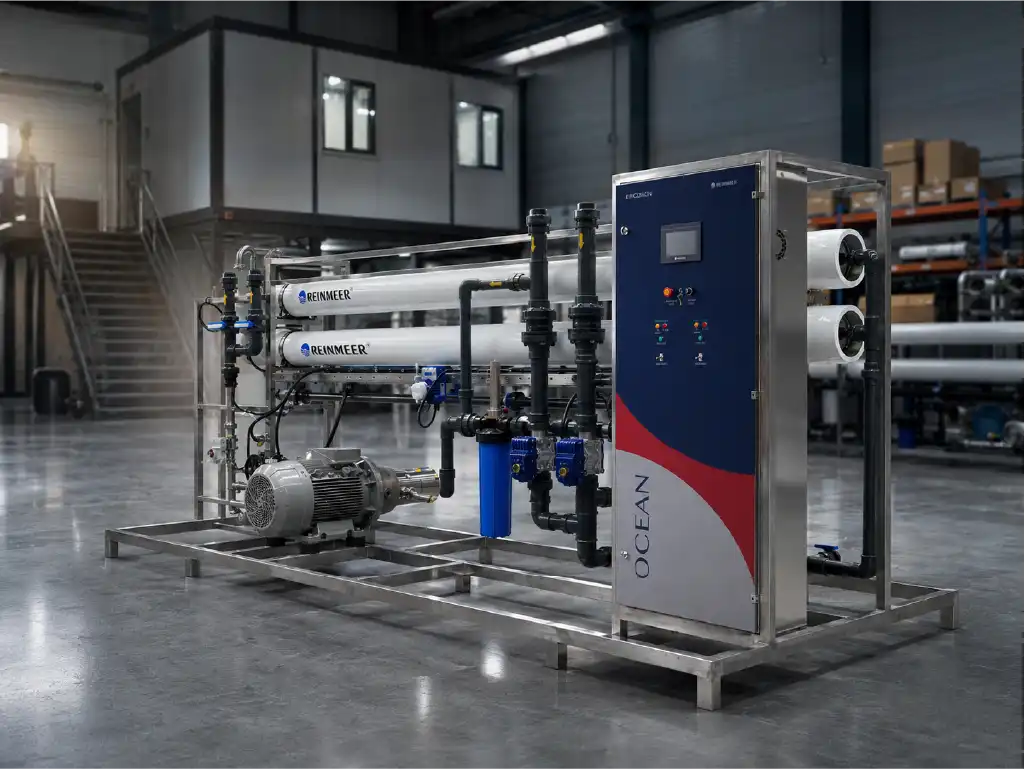
In summer regions, seasonal variation is particularly significant. A facility operating with low occupancy in winter may consume several times more water on the same day during summer. In this case, if seawater desalination capacity calculation is based only on annual averages, the system may remain insufficient during the high season. The correct approach is to calculate low season, normal season and high season scenarios separately.
In industrial facilities, the production process is more decisive than the number of people. Water consumption per product, number of shifts, cleaning cycles, tank washing times and quality requirements should be reviewed. In applications where water quality is sensitive, additional treatment, mineral balance, UV, dosing or special filtration steps may be required after SWRO. These steps also affect the final system capacity and storage plan.
Balance Between Storage Tank, Reserve Capacity and Production Time
The storage tank is often as important as the unit capacity itself in seawater desalination system selection. The tank balances the difference between the production pace of the system and the consumption pace of users. An SWRO system can produce water in a controlled and regular manner for 24 hours; however, user consumption becomes concentrated at specific hours. Therefore, tank volume should be selected to meet peak consumption and provide operational time during system downtime.
Reserve capacity is especially important for hotels, residential complexes, vessels, offshore platforms and facilities that operate continuously. Reserve capacity does not always mean buying a larger unit. In some projects, using a modular system, planning multiple pump and membrane lines or increasing tank volume may be a more accurate solution. Tuna Desalination’s Seawater Reverse Osmosis SWRO Systems can be evaluated in different production flow rates according to project requirements.
Production time is also one of the sensitive points of capacity calculation. The system can be planned to operate 24 hours a day; however, maintenance, backwashing, chemical cleaning, power outages or operational downtime should be considered in every project. For this reason, it may be risky to base seawater desalination capacity calculation on full-capacity 24-hour operation to meet daily demand.
Expert note: Adding a safe design margin in capacity calculation is important; however, this margin should not be oversized without control. For the most accurate result, raw water analysis, consumption profile, tank volume, energy infrastructure and usage scenario should be reviewed together. This protects both water security and investment efficiency.
Operational Effects of Incorrect Capacity Selection
When seawater desalination capacity calculation is done incorrectly, the problem is not only technical; it becomes a strategic issue that directly affects operating costs, user experience, service requirements and long-term system life. Especially in areas where water is critical for operational continuity, the consequences are quickly felt if desalination system flow calculation is incorrect.
Incorrect selection is often noticed during the first high season, at full occupancy or after a power outage. Therefore, seawater desalination capacity calculation should be carried out carefully before commissioning, taking site data and growth plans into account.
Insufficient Capacity, Water Shortage and Customer Satisfaction Risk
An SWRO system with insufficient capacity causes the clean water tank to empty faster than expected when it cannot meet daily demand. In hotels, this can affect room comfort, kitchen operations, laundry processes and hygiene standards. In a holiday facility, water shortage is not seen only as a technical failure; it directly affects customer satisfaction and brand perception.
In residential complexes and villas, insufficient capacity may lead to user complaints, booster pressure problems and restrictions in water use. In industrial facilities, production downtime, product quality risks, disrupted cleaning schedules or additional tanker water costs may occur. Therefore, the daily water consumption calculation process should consider the highest possible usage scenarios.
Insufficient capacity also puts more pressure on the system. Continuous operation of pumps and membranes at their limits may increase maintenance frequency. When membrane performance decreases, the system’s production flow rate drops even further. Over time, this cycle can turn a small capacity error into a costly problem.
Energy and Investment Cost in Oversized Systems
Selecting a system larger than necessary is just as problematic as selecting insufficient capacity. A larger system may mean higher initial investment, more space requirement, larger energy infrastructure, higher chemical consumption and unnecessary maintenance costs. In addition, systems operating at low load may not achieve the expected operating efficiency.
High-pressure pumps in seawater reverse osmosis systems consume significant energy. When system capacity is selected above the actual need, the cost of each cubic meter of produced water may increase. Therefore, seawater desalination capacity calculation should not be oversized only with the idea that “it may be needed in the future”; it should be balanced with modular growth, reserve lines and storage strategy.
The right solution is to establish a system architecture that safely meets today’s demand and is suitable for future expansion. For example, in some projects, containerized seawater desalination systems can provide advantages in portability and fast installation. In vessel and offshore applications, compact structure, limited space and operational safety become priorities.
Practical Approach for Seawater Desalination Capacity Calculation
Although every project is unique, there is a basic roadmap for seawater desalination capacity calculation. First, the facility’s usage areas are listed. Then, daily water consumption is estimated for each area. These values are evaluated together with seasonal intensity and peak usage hours. In the final stage, the SWRO production flow rate, storage tank, booster system and reserve capacity plan are created.
- Total daily clean water demand should be determined.
- Peak consumption hours and simultaneously operating usage points should be analyzed.
- The number of hours the system will produce water each day should be clarified.
- The storage tank should be selected according to the highest consumption and possible downtime scenarios.
- Raw water analysis, pretreatment structure and membrane performance should be included in the calculation.
- Modular expansion options should be evaluated for future capacity increases.
In an example approach, if daily demand is 80 m³ and the system is planned to safely produce water for 16 hours, the basic production flow rate is calculated as 5 m³/hour. However, an appropriate engineering margin should be added to this value for maintenance, temperature changes, membrane aging and consumption increase. In this way, seawater desalination capacity calculation becomes operational project data rather than only a theoretical calculation.
At this point, the technology and safety approach should focus not only on the production flow rate but also on the long-term performance of the system. Automation, pressure control, level sensors, alarm systems, appropriate material selection and a periodic service plan ensure that capacity remains sustainable in the field.
Frequently Asked Questions
How is seawater desalination system capacity calculated?
Seawater desalination system capacity is calculated by evaluating daily clean water demand, peak consumption hours, daily operating time of the system, storage tank volume, raw water quality and reserve capacity requirement together. For the most accurate seawater desalination capacity calculation, site inspection and water analysis should be carried out.
How is daily water demand determined in hotels?
Daily water demand in hotels is determined by considering the number of rooms, occupancy rate, per-person consumption, kitchen, laundry, spa, pool, landscape irrigation and cleaning processes. High season and low season consumption should be calculated as separate scenarios.
Is reserve capacity necessary in an SWRO system?
Yes. Reserve capacity is important especially in projects with continuous water demand such as hotels, residential complexes, industrial facilities, vessels and offshore platforms. This reserve capacity can be planned as a larger single unit, modular system, additional tank volume or reserve pump line.
How should storage tank capacity be selected?
Storage tank capacity should be selected according to daily consumption, peak hour usage, system production time and possible downtime scenarios. If the tank volume is too small, water may be insufficient during peak hours; if it is too large, inefficiency may occur in terms of space, hygiene and investment cost.
Is only the m³/day value enough when selecting a seawater desalination system?
No. The m³/day value is an important starting point, but it is not sufficient on its own. Desalination system flow calculation should be evaluated together with storage planning, raw water analysis, energy infrastructure, usage profile and maintenance scenarios.
Why is water analysis important for SWRO capacity calculation?
Seawater salinity, temperature, turbidity and organic load values affect membrane performance, pretreatment requirements and production efficiency. Therefore, analyzing raw water quality before SWRO capacity calculation is critical for correct system selection.
Determine the Right Capacity for Your Project with Tuna Desalination
Seawater desalination capacity calculation is a much more comprehensive engineering process than simply selecting the right unit. When daily consumption, peak flow, storage tank, raw water quality, seasonal intensity and operational safety are evaluated together, the system operates more efficiently for many years. Tuna Desalination provides project-based assessment for hotels, residential complexes, villas, vessels, offshore platforms and industrial facilities with the Reinmeer Ocean Series. You can receive expert support to determine your water demand correctly, avoid unnecessary investment costs and ensure uninterrupted water supply. If you would like to request a site survey, technical analysis or quotation for your project, contact Tuna Desalination and plan the most suitable seawater desalination system selection together.