
Seawater Desalination System Capacity Calculation: Daily Consumption, Peak Flow and Storage Planning
Haziran 10, 2026
Containerized SWRO System Installation: Site Preparation and Commissioning Checklist
Temmuz 26, 2026
SWRO pretreatment selection is one of the most critical design steps for efficient production, lower operating costs, and longer membrane life in seawater reverse osmosis systems. Seawater is a highly variable source that cannot be sent directly to RO membranes without proper conditioning. Suspended solids, plankton, organic matter, colloids, iron, manganese, oil, biological load, and seasonal increases in turbidity can cause fouling and performance loss on the membrane surface.
For this reason, proper seawater pretreatment is not simply a filter selection. Raw water characteristics, intake structure, coastal conditions, SDI value, turbidity control, flow rate requirement, automation level, and maintenance strategy must be evaluated together. Tuna Desalination develops project-specific pretreatment solutions by analyzing site conditions to help SWRO systems operate more consistently, safely, and sustainably.
Why Is SWRO Pretreatment Selection a Critical Design Decision?
In seawater reverse osmosis systems, membranes are among the most sensitive and costly components responsible for separating salts from water. If the water reaching the membrane surface is not adequately treated, the system may begin operating at higher pressure within a short time. This increases energy consumption, reduces permeate flow, weakens salt rejection performance, and increases the need for chemical cleaning.
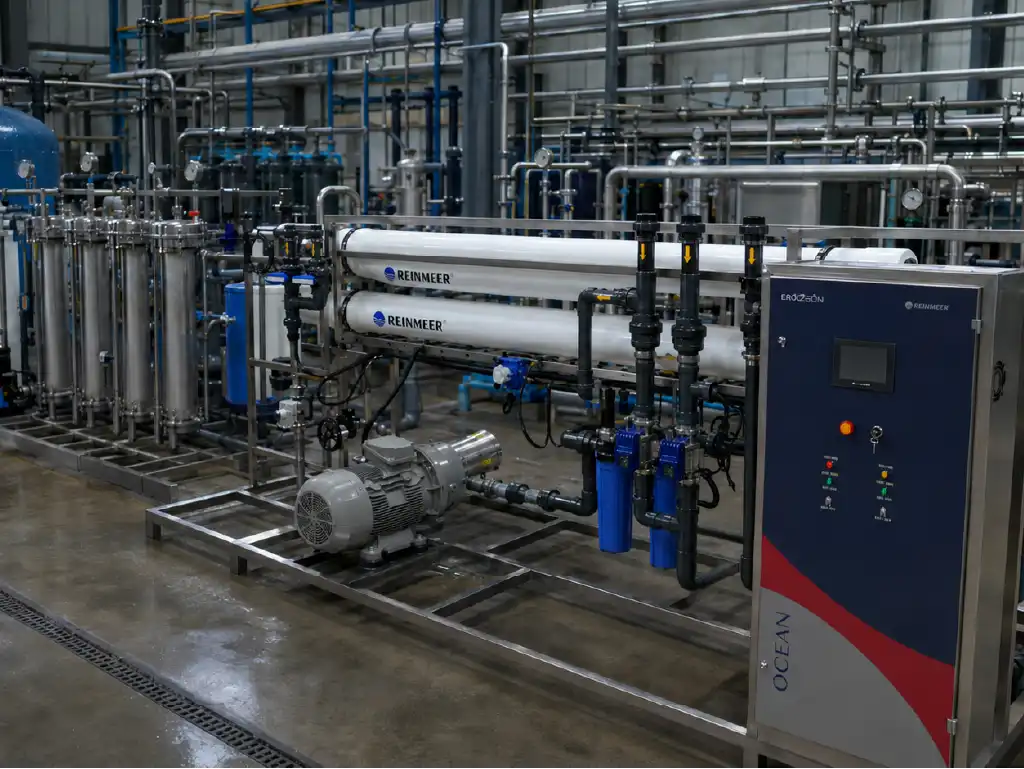
When SWRO pretreatment selection is done incorrectly, the problem often becomes visible only after the system is commissioned. Pressure values that appear acceptable during the first days may start rising within a few weeks. Flow rate decreases, the pressure difference between membrane inlet and outlet increases, the operator needs to replace cartridge filters more frequently, and the system cannot sustain the expected capacity. Therefore, pretreatment is not a secondary section placed before the RO unit; it is the main engineering layer that determines overall plant performance.
For proper design, looking only at seawater salinity is not enough. Water taken from open sea intake, beach wells, piers, port areas, or vessel intake lines behaves differently. Wave movement, wind, rainfall, seasonal algae load, coastal construction activity, and vessel traffic directly affect pretreatment requirements.
How Should Raw Seawater Characteristics Be Evaluated?
A successful seawater pretreatment design begins with accurate sampling and analysis. A single water sample is often not enough because seawater conditions can change during the day and across seasons. Especially in nearshore intake points, turbidity, organic load, and suspended solids may increase significantly after storms.
At the beginning of a project, conductivity, TDS, temperature, pH, turbidity, total suspended solids, iron, manganese, silica, organic carbon, oil and grease, microbiological load, and SDI value should be evaluated together. These data determine not only which filters will be used, but also filter diameters, backwash frequency, chemical dosing requirements, automation level, and operational safety factor.
How does the SDI value indicate membrane fouling risk?
The SDI value is an important indicator used to understand the fouling potential caused by colloidal and fine particulate matter in water. Even if turbidity appears low, SDI may still be high. In this case, the water may look visually clean while still containing fine particles that can cause rapid fouling on the membrane surface.
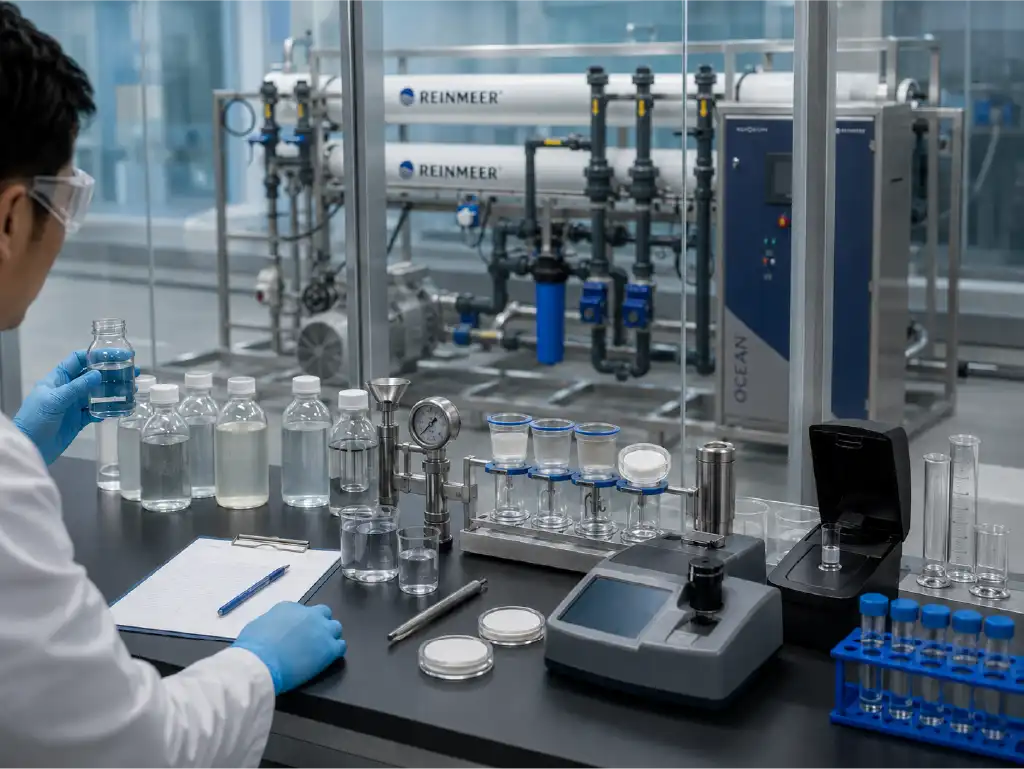
In an SWRO membrane protection strategy, SDI measurement should be monitored regularly. Design targets are evaluated according to membrane manufacturer recommendations, system capacity, and site conditions. As a general engineering approach, low and stable SDI is targeted in RO feed water. In sites with high SDI fluctuations, a conventional sand filter alone may not be sufficient; coagulation, multimedia filtration, fine filtration, or ultrafiltration for seawater applications may be required.
Why is turbidity control not enough on its own?
Turbidity control is a practical and fast indicator for monitoring pretreatment performance. However, turbidity only provides information about the particulate load that affects light transmission in water. Organic matter, dissolved components, microbiological activity, or very fine colloids may not always create a high turbidity value.
For this reason, SWRO pretreatment selection should be interpreted together with turbidity, SDI, suspended solids, organic load, and site observations. Especially in tourism facilities, islands, offshore platforms, and port-area systems, relying only on instant turbidity measurement may be risky because water quality can change rapidly and seasonally.
Main Technologies Used in SWRO Pretreatment Selection
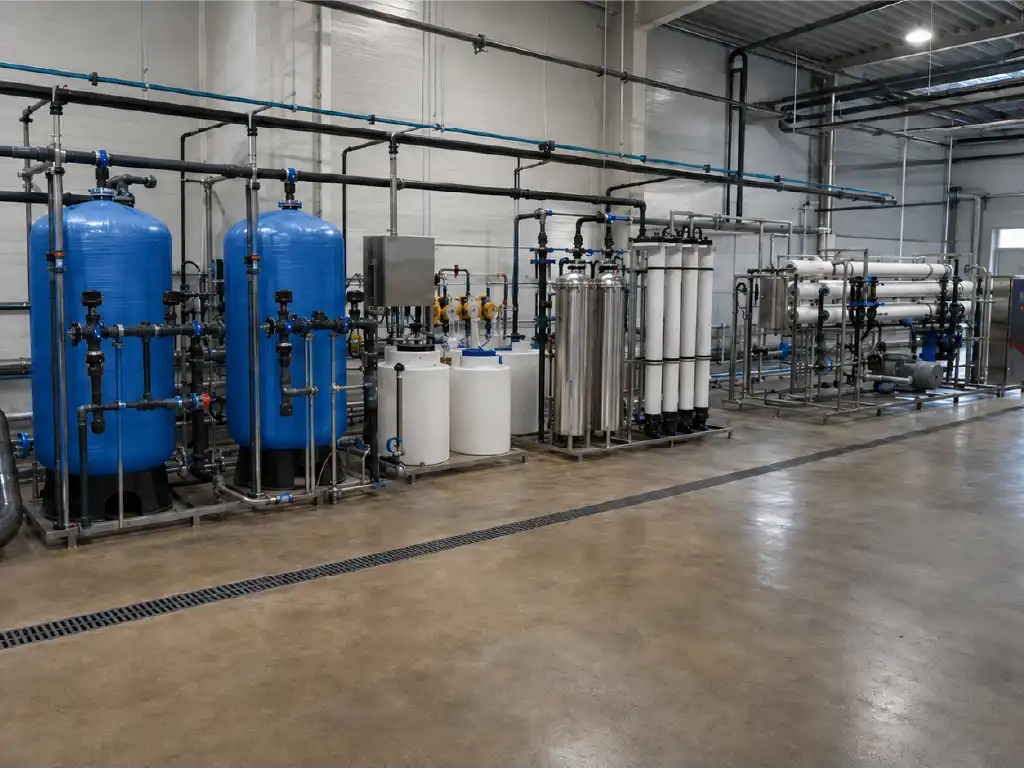
Not every seawater project needs the same pretreatment line. In some projects, a well-designed intake structure, multimedia filtration, and cartridge filtration may be sufficient. In more challenging sites, chemical conditioning, lamella clarification, disc filtration, ultrafiltration, and advanced automation may be required. The key is to evaluate the equipment not individually, but as a complete process chain.
| Pretreatment step | Main function | When is it preferred? |
|---|---|---|
| Coarse strainer and intake protection | Retains large particles, algae, shells, and physical debris | For open sea intakes, pier lines, and coastal intakes |
| Multimedia filter | Reduces suspended solids and turbidity | In standard SWRO projects with moderate particulate load |
| Chemical dosing | Supports coagulation, pH control, dechlorination, or antiscalant dosing | In waters with colloidal load, biological risk, or scaling potential |
| Cartridge filter | Acts as the final physical protection layer before RO | As a safety barrier in all SWRO systems |
| Ultrafiltration | Reduces fine particles, colloids, and microbiological load more precisely | For high SDI, fluctuating turbidity, and sensitive membrane protection needs |
When are sand and multimedia filters sufficient?
Sand or multimedia filters are among the most commonly used solutions in seawater pretreatment lines. With properly selected filter media, correct filtration velocity, and a regular backwash program, suspended solids and turbidity control can be achieved. However, for these filters to be successful, the inlet water load must remain within reasonable limits.
If the filtration velocity is selected too high, rapid clogging or particle breakthrough may occur. Backwash water quality, air scouring requirement, valve automation, and differential pressure monitoring also affect performance. Therefore, multimedia filter sizing should be based not only on flow rate but also on the contaminant characteristics of the seawater.
What advantages does ultrafiltration provide in seawater projects?
Ultrafiltration provides a strong barrier in seawater pretreatment, especially in sites with high SDI value, heavy biological load, algae bloom risk, or variable turbidity. UF membranes provide more precise physical separation than conventional media filters and help send more stable feed water quality to RO membranes.
The ultrafiltration and physicochemical pretreatment comparison available in the U.S. Environmental Protection Agency’s HERO database shows that SDI, turbidity, and particle removal are important parameters for evaluating pretreatment performance in open-intake SWRO systems. Such technical studies support the need for a site-data-based approach in SWRO membrane protection decisions.
Ultrafiltration is not mandatory for every project; however, it can increase the safety factor in projects where water quality fluctuates, operator intervention is limited, or uninterrupted production is critical. That said, a UF system also requires proper backwashing, chemically enhanced cleaning, transmembrane pressure monitoring, and periodic maintenance.
Measurement and Monitoring Criteria for Membrane Protection
SWRO pretreatment selection should not be seen as a decision made only during the initial investment phase. After the system is commissioned, measurement and monitoring must continue. As seawater conditions change, the load on the pretreatment line also changes. Therefore, automation, sensor selection, and operator checklists are integral parts of the design.
The main parameters to be monitored include inlet turbidity, filter outlet turbidity, SDI value, cartridge filter pressure difference, multimedia filter differential pressure, RO inlet pressure, conductivity, pH, temperature, and flow rate. When these values are recorded regularly, preventive action can be taken before membrane fouling turns into serious performance loss.
What does cartridge filter replacement frequency indicate?
Very frequent cartridge filter clogging is often an early sign of a problem in the pretreatment line. If cartridge filters create a high pressure difference within a short time, possible causes may include particle breakthrough from the multimedia filter, insufficient backwashing, improper coagulation, sudden turbidity increase in the intake line, or incorrect filter surface velocity.
At this point, simply reducing the cartridge filter micron rating may not provide a permanent solution. Using a finer cartridge may temporarily protect the RO membrane, but it can also increase consumable costs and make operational continuity more difficult. The correct approach is to analyze the root cause through raw water quality and pretreatment performance.
When is chemical conditioning required?
Chemical dosing in seawater pretreatment should be used in a controlled and measurement-based manner. Coagulant dosing can help fine particles become easier to retain. Antiscalant may be preferred to reduce mineral scaling risk in RO membranes. Chemicals such as sodium metabisulfite may be used to prevent chlorine from damaging the membrane.
However, excessive or insufficient chemical dosing can create new problems. Too much coagulant may increase filter load, incorrect pH control may increase corrosion or scaling risk, and inadequate chlorine removal may cause membrane oxidation. Therefore, dosing points, mixing time, online measurement devices, and control scenarios must be designed on a project-specific basis.
How Does the Pretreatment Approach Change in Different Applications?
SWRO systems can be used in hotels, villas, residential complexes, vessels, offshore platforms, social facilities, industrial plants, and emergency mobile water treatment projects. In Tuna Desalination’s seawater reverse osmosis solutions, the pretreatment approach is shaped not only by the water source but also by the application scenario.
In a hotel, the system may be expected to operate at high capacity during peak season, while in a villa, a lower-flow but comfort-focused usage scenario may be involved. Offshore platforms may require more durable equipment, redundant design, and stronger automation because service access is limited. In marine applications, compact layout, vibration, sea conditions, and limited maintenance space must be considered.
How should pretreatment be planned in containerized systems?
Containerized seawater treatment systems offer advantages such as fast installation, mobility, and integrated engineering. However, because space inside the container is limited, the layout of pretreatment equipment must be carefully planned. Filter tanks, dosing units, chemical storage area, drainage line, backwash connections, and maintenance access should be considered together.
In container design, simply fitting the equipment inside the container is not enough. The operator must be able to replace cartridge filters safely, pumps must have service access, panels and automation equipment must be protected from humidity, and ventilation and climate conditions must be provided. For this reason, SWRO pretreatment selection should be handled together with mechanical layout and operational ergonomics.
Expert note: In seawater projects, pretreatment capacity should not be selected with the same logic as RO capacity alone. If backwash flow, peak turbidity, backup operation during maintenance, and raw water fluctuations are not considered, the system may be theoretically correct but practically insufficient.
The Operational Impact of Incorrect Pretreatment Selection
Incorrect pretreatment selection is often seen only as a technical problem; however, its impact directly affects operating costs and service continuity. Early membrane fouling, more frequent CIP cleaning, higher chemical consumption, increased energy bills, consumable filter costs, and downtime can negatively affect the return on investment.
For example, in tourism facilities, a decrease in water production during the summer season can directly affect guest satisfaction and facility operations. In offshore or vessel applications, when the water treatment system does not operate reliably, external water supply can become logistically difficult and costly. In industrial projects, fluctuations in water quality may put production processes at risk.
Therefore, the SWRO membrane protection strategy should not be simplified merely to reduce initial investment cost. A pretreatment line that appears less expensive at first may create higher operating expenses in the long term due to more frequent membrane replacement and system maintenance. Proper engineering should establish a balanced solution between investment cost and operational reliability.
Project-Based Checklist for SWRO Pretreatment Selection
SWRO pretreatment selection should follow a systematic decision-making process. Instead of applying the same formula to every project, site data, capacity target, and operational expectations should be evaluated together. The checklist below shows the key criteria for proper design.
- Raw water samples should be taken in different periods and analysis results should be compared.
- SDI value and turbidity control should be evaluated together.
- The intake point should be examined separately as open sea, beach well, pier, or vessel line.
- Filter sizing should be based not only on flow rate but also on particulate load.
- Backwash water, drainage, and waste management should be planned from the beginning.
- Chemical dosing points should be determined together with measurement and automation logic.
- Cartridge filter consumption should be included in the operating cost calculation.
- Maintenance access, spare equipment, and service convenience should be considered in the design.
Tuna Desalination evaluates these criteria not only theoretically, but also according to real site conditions. Capacity, intended use, water source, energy infrastructure, and maintenance expectations are analyzed to create an applicable pretreatment architecture. For more details, you can review Tuna Desalination’s technology and seawater treatment approach.
Frequently Asked Questions
What is the most important parameter for SWRO pretreatment selection?
A single parameter is not enough. SDI value, turbidity, suspended solids, organic load, intake point, and seasonal variability should be evaluated together. Especially for membrane protection, SDI and turbidity control are among the most critical indicators.
Is ultrafiltration always required in seawater pretreatment?
No. Ultrafiltration is not mandatory in every project. However, in projects with high or fluctuating SDI value, heavy biological load, algae risk, open sea intake, or uninterrupted production requirements, ultrafiltration can provide significant advantages in seawater pretreatment.
Is a sand filter enough to protect SWRO membranes?
In suitable water quality conditions and properly sized systems, a multimedia or sand filter may be sufficient. However, if there is high turbidity, fine colloidal load, or frequently changing seawater conditions, additional chemical conditioning, fine filtration, or a UF system may be required.
Plan the Right SWRO Pretreatment Selection with Tuna Desalination
Choosing the right system for a seawater treatment investment is not a decision that should be made only by looking at a capacity table. Raw water analysis, intake structure, intended use, site conditions, maintenance capability, and long-term operating costs must be evaluated together. Tuna Desalination offers an engineering-focused approach in seawater reverse osmosis solutions for hotels, villas, residential complexes, vessels, offshore platforms, and industrial facilities. Making the right decision for SWRO pretreatment selection is critical for membrane protection and uninterrupted water production. For technical analysis, site assessment, capacity evaluation, or quotation support, you can explore Tuna Desalination’s seawater treatment solutions and receive project-specific guidance from an expert team.