
The Logistics Advantages of Producing Your Own Water on Ships and Offshore Platforms
Mayıs 4, 2026
Central Seawater Desalination Systems for Coastal Sites, Villas, and Shared Living Areas
Mayıs 22, 2026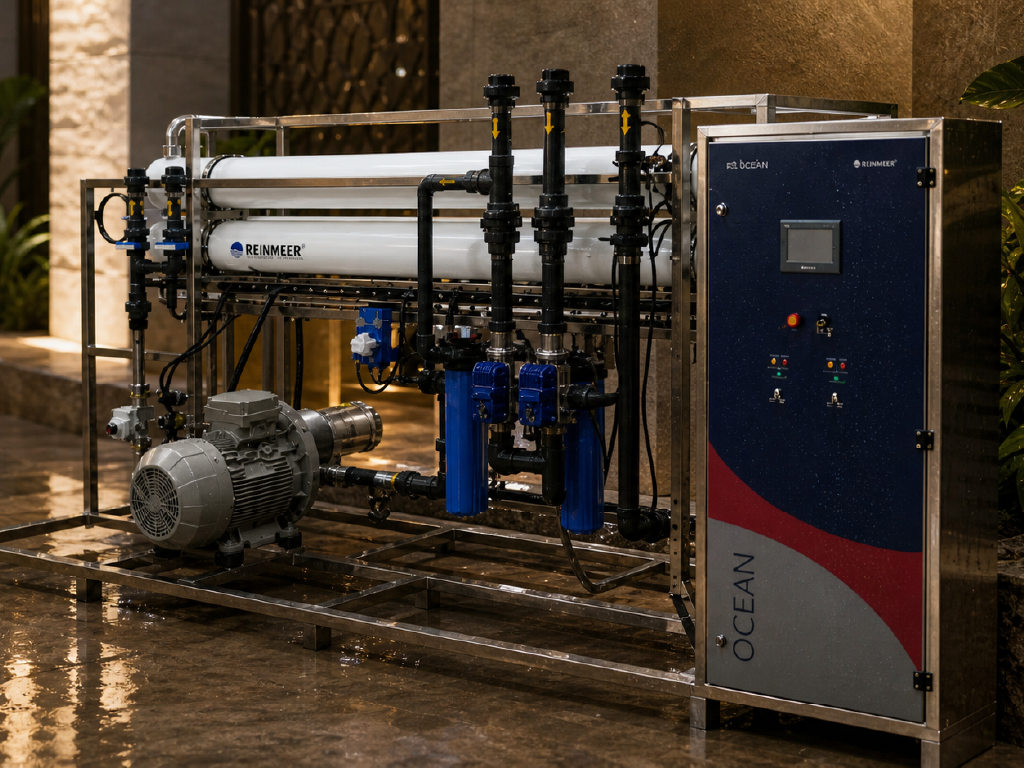
As the tourism season approaches, one of the most critical preparation areas for hotels is water infrastructure. During the summer months, many operations increase at the same time, including higher occupancy rates, intensive kitchen use, pool circulation, laundry needs, shower consumption, and landscape irrigation.
This intensity becomes a serious management issue, especially in coastal regions and locations where water resources are limited.
Hotel guests do not evaluate their holiday experience only through room comfort, view, food quality, or service speed. The water pressure in the shower, the feeling water leaves on the skin, the clarity of pool water, the quality of water used in food preparation, and the overall hygiene perception throughout the facility are also direct parts of guest satisfaction.
For this reason, Quality Water Management is not only a technical infrastructure topic for hotels. It is also a strategic investment in brand value, operational sustainability, and guest experience.
Experiencing water shortages during the season can reduce the service quality of the facility, increase maintenance costs, and put the hotel’s reputation at risk. A professional Quality Water Management approach enables hotels to use their existing water resources in the most efficient way, evaluate alternative sources, and provide the right water quality for each area of use.
Water consumption in hotels is much more diverse compared to an ordinary commercial business. From shower use in guest rooms to industrial kitchen equipment, from pool systems to steam boilers, from landscape areas to cleaning processes, water is the invisible but essential resource that must operate without interruption.
Especially in summer, regional water cuts, decreases in municipal water pressure, quality fluctuations in well water, and salinity risks in seaside facilities become more noticeable.
At this point, Quality Water Management covers not only water supply but also water analysis, treatment, storage, distribution, and continuous control. For hotel management teams, the goal is not only to find water but to deliver the right quality of water to the right point, at the right cost, and without interruption.
Professional water treatment systems such as Reinmeer solutions support tourism businesses in making reliable infrastructure planning before the season begins.
The Direct Relationship Between Guest Satisfaction and Water Quality
Many details that affect guest satisfaction in a hotel are connected to water quality. The hardness of the water used in guest rooms, lime stains in bathrooms, clogged shower heads, marks on faucet surfaces, and the texture of textiles after washing can noticeably affect the user experience.
Hard water that is not properly controlled may cause soap and shampoo to foam less, create a dry feeling on the skin, and lead to unwanted limescale appearances in bathrooms.
Even if this situation does not become a direct complaint, it can weaken the guest’s perception of the facility. Professional Quality Water Management brings these invisible problems under control before the season starts. Regular monitoring of parameters such as water hardness, conductivity, pH, chlorine level, microbiological safety, and total dissolved solids helps the hotel maintain its service standards.
The impact of water quality on guest satisfaction in hotels is not limited to rooms. Water used in restaurants can affect the quality of food and beverage preparation processes. Coffee machines, ice machines, dishwashers, and steam cooking equipment operate more efficiently and last longer when they work with properly treated water.
In pool areas, the clarity, smell, and hygiene level of the water are among the most important factors that determine the guest’s sense of trust. Therefore, Quality Water Management is a system approach that supports service quality at every touchpoint of the hotel.
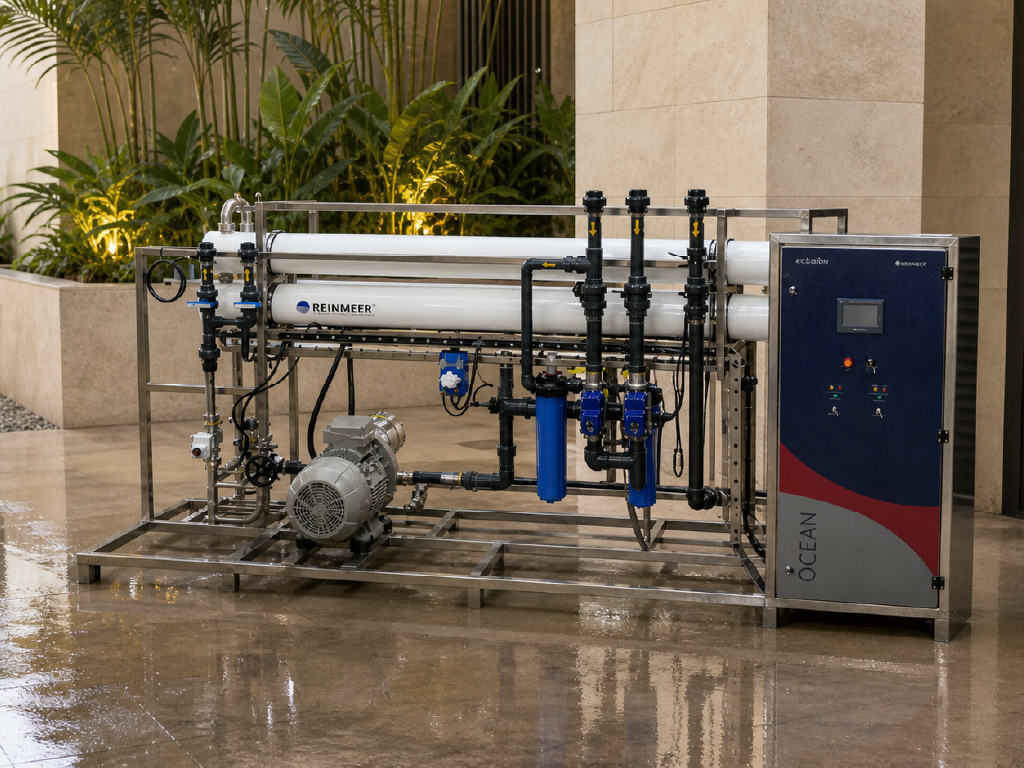
In facilities where proper water management is not applied, visible problems may appear in the middle of the season. Limescale-covered fixtures, cloudy pool water, equipment failures, and high chemical consumption can challenge the business both in terms of cost and customer experience.
For modern tourism businesses, water quality is no longer a topic that belongs only to the technical department. General management, purchasing, technical service, food and beverage management, housekeeping, and guest relations departments are all directly affected by the results of water quality. This is why Quality Water Management should be positioned as a holistic planning area at the center of hotel operations.
When regular analysis, treatment system selection suitable for capacity, proper storage conditions, hygienic distribution lines, and periodic maintenance processes come together, the facility can provide a safer and more controlled service during the peak season. The technical success that guests do not notice often returns as a comfortable holiday experience without complaints.
The Effect of Soft and Treated Water on Plumbing Life
In hotels, plumbing infrastructure is a continuously operating system under high consumption pressure and has critical importance in terms of maintenance costs. Calcium and magnesium minerals found in hard water can cause limescale accumulation over time in pipelines, valves, heat exchangers, resistances, shower heads, and hot water systems.
This accumulation reduces water flow, makes energy transfer more difficult, and causes equipment to consume more energy. The use of soft and treated water significantly reduces these risks. For this reason, Quality Water Management is a fundamental requirement for protecting plumbing systems and ensuring that technical equipment operates with a longer service life.
Extending the life of plumbing systems does not only mean reducing maintenance expenses for hotels. It also means preventing operational interruptions, reducing guest complaints, and minimizing the need for emergency intervention during the season.
For example, a limescale layer formed in hot water systems reduces energy efficiency and causes more energy to be consumed for water to reach the desired temperature.
Using hard water in laundry machines may increase detergent consumption and cause textile fabrics to wear out faster. In dishwashers, stains on glass surfaces, dullness on plates, and limescale accumulation inside the equipment may occur.
To prevent these risks, Quality Water Management should handle water softening, filtration, reverse osmosis, and regular analysis processes together.
In pre-season maintenance planning, it is highly important to check water treatment systems, replace filters, measure membrane performance, examine the hygienic condition of storage tanks, and evaluate critical points on the plumbing system.
Professional Quality Water Management focuses not only on solving the current problem but also on preventing potential technical issues before they occur. This approach makes the hotel’s maintenance budget more predictable.
Especially in hotels located by the sea, if well water or alternative water sources are used, salinity and mineral load may be higher. In this case, standard filtration solutions may not be sufficient.
Advanced treatment systems such as Reinmeer make a strong contribution to protecting the plumbing infrastructure when they are designed specifically according to the water source and intended use.
Ideal Water Values for Pool and Kitchen Use
In hotels, pool and kitchen areas are among the most sensitive usage points in terms of water quality. In pool water, values such as clarity, pH balance, disinfection level, alkalinity, and hardness must be kept under control.
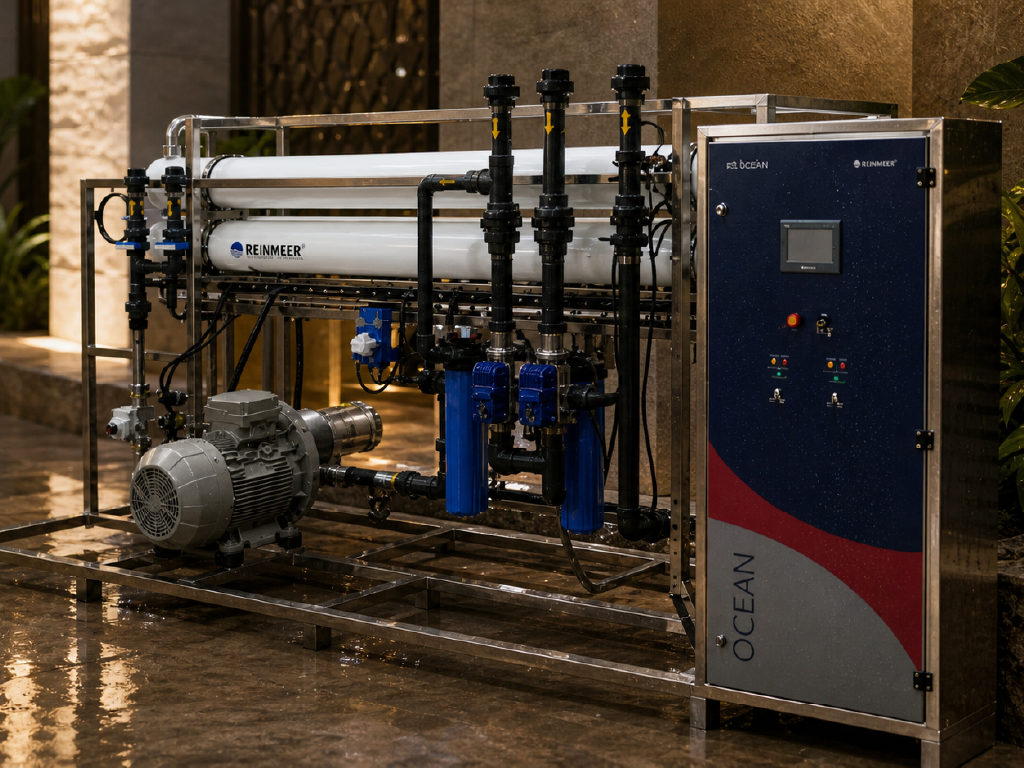
Fluctuations in these values may cause cloudy water, increased chemical consumption, limescale on surfaces, and discomfort for guests.
In kitchen use, water is expected to be odorless, clear, hygienic, and compatible with equipment. When coffee machines, ice machines, dishwashers, and steam equipment operate with ideal water values, both product quality and equipment performance improve. Therefore, Quality Water Management requires a professional plan that evaluates pool and kitchen processes separately.
| Usage Area | Values to Be Controlled | Benefit for the Business |
|---|---|---|
| Guest Rooms | Hardness, odor, color, pressure, microbiological safety | More comfortable shower experience and fewer fixture stains |
| Pool Systems | pH, free chlorine, alkalinity, hardness, clarity | Hygienic, clear, and confidence-building pool experience |
| Industrial Kitchen | Conductivity, hardness, taste, odor, particle load | Better beverage quality and longer equipment life |
| Laundry | Hardness, iron, manganese, total dissolved solids | Softer textiles and lower detergent consumption |
| Technical Systems | Scaling tendency, salinity, conductivity | Energy efficiency and lower maintenance risk |
In pool water management, disinfection alone is not enough. The water source, pre-treatment quality, filtration efficiency, and circulation system must be evaluated together. Water with high hardness or an unsuitable mineral balance may cause sediment formation on pool surfaces, equipment wear, and difficulty in maintaining chemical balance.
On the kitchen side, water quality creates noticeable results, especially in beverage preparation processes. The water used in coffee, tea, ice, and food preparation can affect the taste and presentation quality of the product.
Professional Quality Water Management optimizes water according to its intended use in these areas to maintain standards. In this way, the hotel both meets hygiene expectations and increases equipment efficiency.
When seasonal intensity begins, pool and kitchen systems must operate without interruption. Failures or quality problems in these areas directly affect the guest experience. Especially in all-inclusive concepts, water consumption in kitchen and service areas continues at high levels throughout the day.
For this reason, Quality Water Management must be planned with the correct flow rate, correct storage, and correct treatment technology according to the facility’s capacity. Reinmeer solutions can be designed to sustainably provide the water quality hotels need at different usage points. This approach helps the business secure not only the current season but also its water strategy for the coming years.
Advantages of SWRO Systems for Hotels
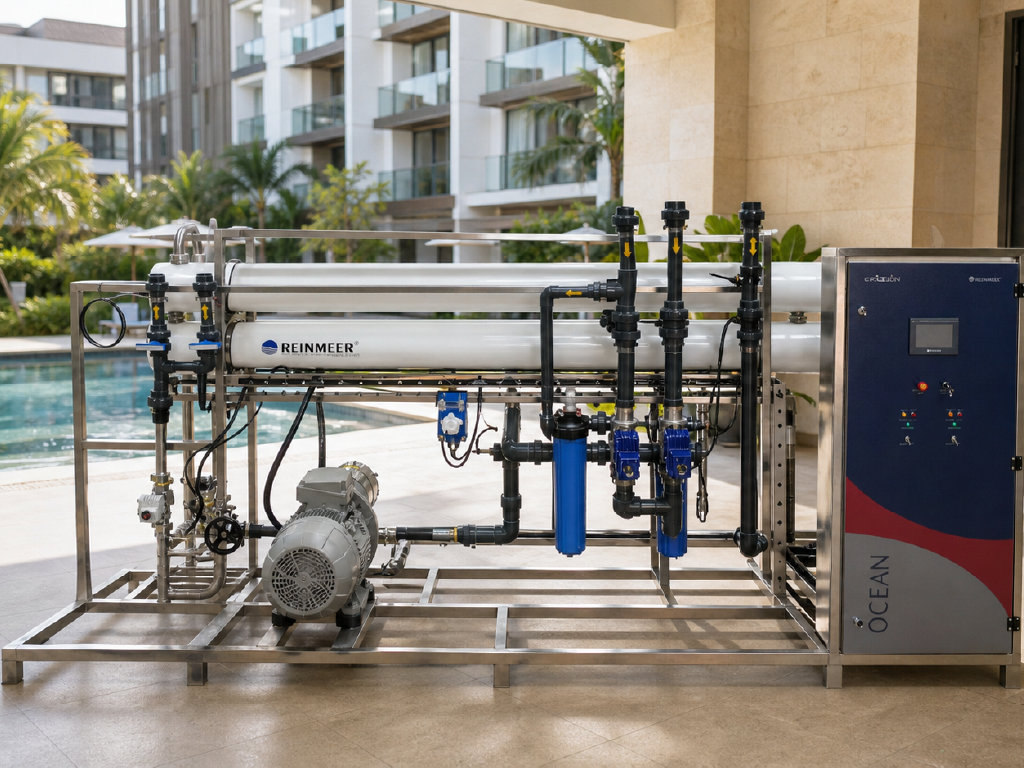
For hotels located by the sea, seawater can become a strong alternative source when evaluated with the right technology. SWRO, or Seawater Reverse Osmosis systems, treat highly saline seawater through special membrane technology and convert it into usable water.
These systems provide a strategic advantage, especially in regions where municipal water is insufficient, transported water costs are high, or well water has quality problems. For hotels, Quality Water Management requires creating source diversity and avoiding dependence on a single water source. At this point, SWRO systems provide the business with a more predictable, controlled, and sustainable water infrastructure.
One of the most important advantages of SWRO systems is that they support water supply during seasonal peak periods. In summer, the population in many tourism regions temporarily increases, and regional water infrastructure may struggle to meet high demand. In this situation, hotels may experience water pressure problems, interruptions, or quality fluctuations during the period when occupancy is highest.
Seawater reverse osmosis systems help hotels increase their own water production capacity and strengthen operational safety. In this respect, Quality Water Management means not only treating existing water but also benefiting from alternative and sustainable sources.
Reinmeer SWRO systems can be engineered according to the capacity needs, water source analysis, and usage areas of hotels. When pre-filtration, high-pressure pumps, membrane systems, energy recovery components, automation infrastructure, and product water control processes are planned together, it becomes possible to obtain high-quality water from seawater. With proper design and regular maintenance, these systems make a significant contribution to hotel technical operations.
In a professional Quality Water Management approach, system selection should not be based only on capacity but also on the intended use of the water. For example, kitchens, laundry areas, pool make-up water, general utility use, and technical systems may each have different quality requirements.
SWRO systems are also valuable in terms of cost control. Transported water can become a significant expense item, especially in high season. Dependence on municipal water may also make business planning more difficult due to price increases and regional interruptions.
With seawater reverse osmosis technology, a hotel can make its water production costs more calculable. Of course, investment analysis for each facility should be carried out by considering capacity, energy cost, maintenance plan, water analyses, and usage intensity. However, a correctly engineered system can become an important part of a long-term Quality Water Management strategy.
In modern SWRO systems, automation, monitoring, and safety functions provide ease of operation. System pressure, conductivity value, flow rate, membrane performance, and alarm conditions can be kept under control. This level of control is a major advantage for hotels in terms of service continuity throughout the season.
Professional Quality Water Management does not end with system installation. It becomes sustainable with periodic maintenance, consumable tracking, membrane cleaning, water analyses, and technical service support. Reinmeer solutions provide a reliable infrastructure for tourism facilities with a system structure that supports this holistic approach.
Water management is also becoming increasingly important for hotels in terms of environmental sustainability. Guests now prefer not only comfortable service but also facilities that use their resources consciously.
Efficient water use, evaluation of treated water in the right areas, reduction of waste, and long-term planning in water supply strengthen the hotel’s sustainability perception. At this point, Quality Water Management brings environmental responsibility and operational efficiency together. Seawater reverse osmosis systems can be a powerful solution for managing water resources more strategically, especially in coastal hotels.
SWRO systems can be considered not only for large resort hotels but also for boutique hotels, holiday villages, villas, coastal facilities, and mixed tourism projects operating by the sea. What matters is designing the system with the right capacity and defining water quality targets correctly.
Insufficient capacity may become inadequate in the middle of the season, while an oversized system may reduce investment efficiency. Therefore, professional site assessment, analysis, and project design are essential for Quality Water Management. Reinmeer expertise supports hotels in identifying the right solution by evaluating water source structure, consumption profile, and target water quality together.
Conclusion: Meet Reinmeer Solutions for Uninterrupted Service
A successful hotel operation during the tourism season depends on the smooth operation of invisible infrastructures. Water is one of the most critical of these infrastructures. From guest rooms to pools, from kitchens to laundry areas, from technical systems to landscape areas, water quality determines the service standard at every point of the facility.
For this reason, Quality Water Management should be among the top priorities on the pre-season preparation list. With the right analysis, proper treatment technology, regular maintenance, and sustainable source planning, hotels can ensure service continuity while managing costs in a more controlled way.
Reinmeer SWRO and water treatment solutions provide a professional response to the uninterrupted, reliable, and high-quality water needs of tourism businesses of different scales, especially hotels located by the sea.
Increasing occupancy rates during summer make the weak points in hotels’ water infrastructure more visible. Water interruptions, limescale problems, pool water imbalances, or kitchen equipment failures that appear after the season begins are costly for the business and risky in terms of reputation.
To prevent these problems, Quality Water Management should be planned before the season, existing systems should be checked, and, if necessary, they should be supported with professional treatment solutions. Reinmeer helps tourism facilities experience a safer, more efficient, and more sustainable season with water treatment systems suitable for their needs.
For hotels that want to make a strong start to the tourism season, evaluating water infrastructure today provides a major advantage. Reinmeer solutions offer a customized system approach by evaluating your facility’s water source, daily consumption needs, usage areas, and target quality standards together.
From seawater reverse osmosis systems to softening units, from filtration solutions to automation-supported control infrastructures, every stage is planned with a professional engineering approach.
In this way, your hotel can reduce maintenance costs, increase guest satisfaction, and make water management more predictable while providing uninterrupted service during the high season. If you consider water not only as a supplied resource but also as a strategic value that determines business quality, you can move your Quality Water Management process to a safer foundation with Reinmeer.
Meet Reinmeer solutions to discover the right system for your hotel’s needs, receive a technical assessment, and strengthen your water infrastructure before the season. With the right system selection, secure both your current operation and your water strategy for future seasons.