
How Does Seawater Turn into Fresh Water? What Is Reverse Osmosis Technology?
Mayıs 4, 2026
Quality Water Management and Uninterrupted Service in Hotels
Mayıs 4, 2026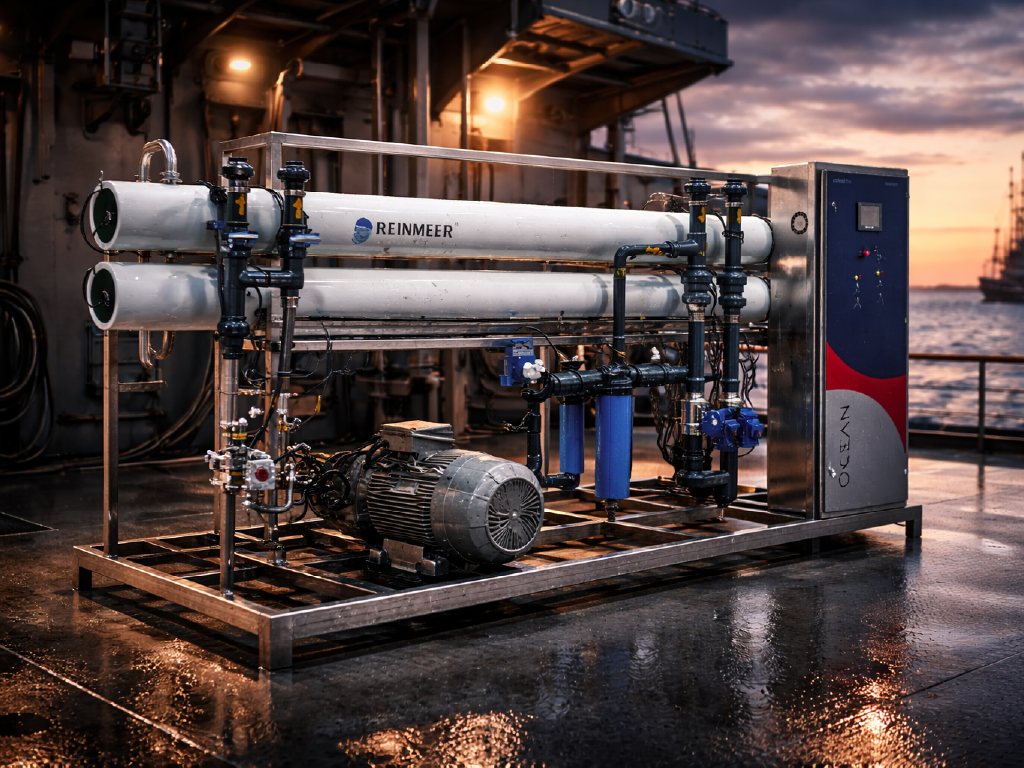
Operating at sea does not depend only on powerful equipment, experienced personnel, and accurate planning. Water management is also one of the most critical factors that determine operational continuity for the maritime, energy, defense, tourism, fishing, and offshore industries.
Especially for Ships and Offshore Platforms, having access to a clean, reliable, and sustainable water source directly affects many needs, from daily living comfort to technical processes. In traditional methods, drinking and utility water is often loaded from ports, transported by tankers, or managed through scheduled supply planning at certain intervals.
However, route changes at sea, weather conditions, port congestion, and supply delays can make this process risky. At this point, modern reverse osmosis technologies that treat seawater on-site and make it usable offer significant logistical freedom for Ships and Offshore Platforms.
Today, thanks to advanced seawater desalination systems, Ships and Offshore Platforms can produce their own water without depending on external sources. This approach does not only simplify water supply; it also reduces operational costs, decreases storage load, and adds flexibility to voyage planning. Waiting for a water tanker at sea means not only loss of time but also additional costs in terms of fuel, personnel, planning, and safety.
With compact and high-efficiency desalination systems, seawater is taken directly into the system, passed through pre-filtration stages, desalinated through high-pressure reverse osmosis membranes, and made ready for use according to the required quality standards. This technology brings independence, efficiency, and sustainability together for Ships and Offshore Platforms.
Water consumption on Ships and Offshore Platforms is not limited to drinking water. Kitchens, showers, cleaning, technical equipment supply, fire safety preparations, crew living areas, and certain industrial processes create regular water demand. Meeting this need through external supply during long-term offshore operations is both complex and costly.
For offshore platforms, research vessels, cruise ships, commercial cargo ships, naval vessels, fishing fleets, and floating facilities, having water available at all times is highly important for operational safety. Systems that can produce their own water allow water to be managed not as a transported resource but as a strategic value that can be continuously produced. For this reason, seawater desalination technology is becoming one of the essential infrastructures of modern marine operations for Ships and Offshore Platforms.
Space Saving with Marine-Type Compact Desalination Systems
Every square meter is valuable on marine vessels and offshore structures. Engine rooms, equipment rooms, living areas, storage sections, and technical service areas are planned within certain limits. Therefore, desalination systems designed for Ships and Offshore Platforms must not only deliver strong performance. They must also be compact, accessible, easy to maintain, and compatible with the existing layout.
Marine-type compact desalination systems are engineering solutions developed from this need. Reverse osmosis systems that convert seawater into fresh water are designed to offer maximum production capacity with minimum space usage. This reduces dependence on large-volume water tanks, enables more efficient space management on board, and makes operational planning more flexible.
For Ships and Offshore Platforms, space saving does not only mean gaining physical area. It also provides indirect advantages such as lower storage requirements, reduced weight, more balanced load distribution, and more efficient fuel use. Especially on long voyages, loading large amounts of fresh water onto a ship can increase weight and affect energy consumption. In systems that produce their own water, the required water can be continuously produced during the voyage.
In this way, the volume allocated for water storage in ship planning can be optimized. On offshore platforms, a more balanced infrastructure can be established between crew living areas and technical sections. Compact desalination systems create a more controlled working structure for Ships and Offshore Platforms from both engineering and logistics perspectives.
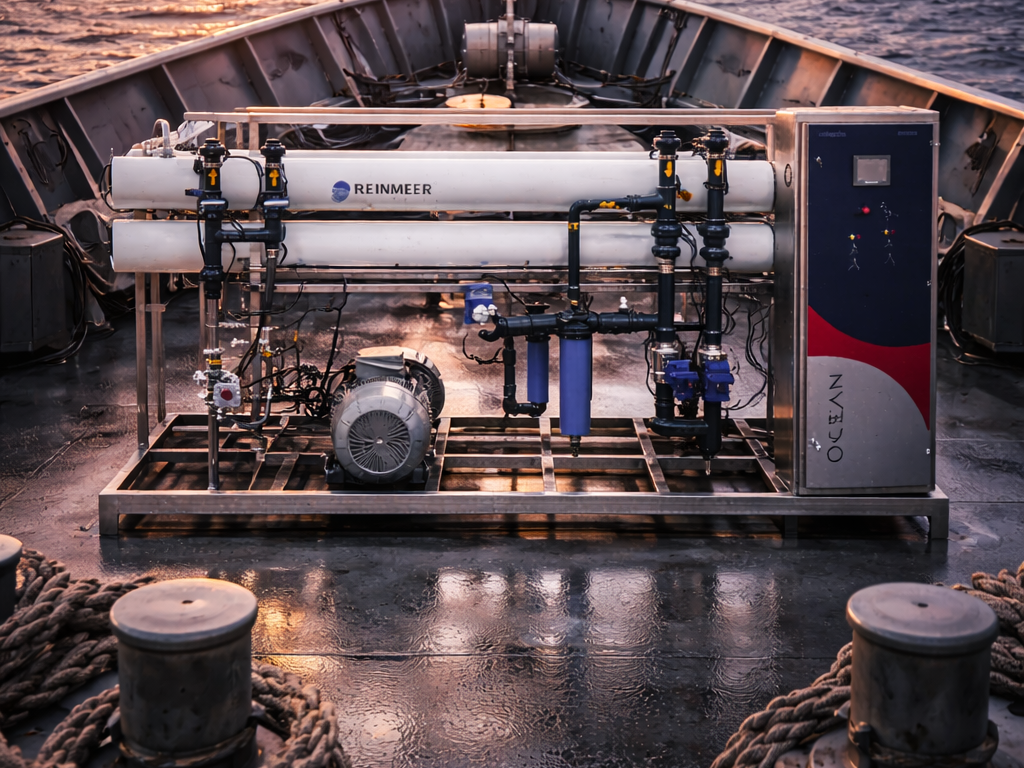
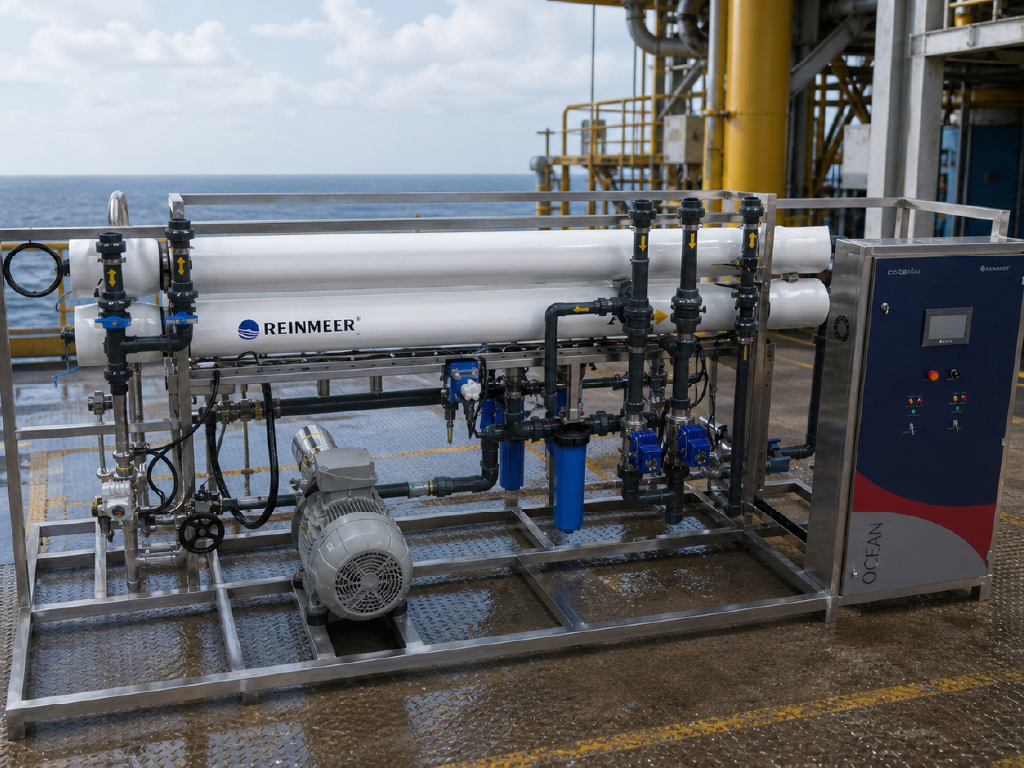
The components used in marine-type systems are generally selected to withstand the harsh conditions of the marine environment. Materials suitable for saltwater, humid atmosphere, vibration, temperature changes, and continuous operation support the long service life of the system. Stainless steel frames, marine-type pumps, high-quality membranes, automation panels, and pressure control equipment are the main parts of these structures.
Service convenience is also an important criterion in systems developed for Ships and Offshore Platforms. Practical filter replacement, membrane inspection, pump maintenance, and automation monitoring processes make technical intervention easier during offshore operations. In this way, the system does not only produce water; it also functions as a sustainable infrastructure that increases operational reliability.
Ocean Series Compact Solutions for Limited Spaces
Delivering high performance in limited spaces is one of the most important engineering goals of desalination systems developed for Ships and Offshore Platforms. Ocean Series compact solutions represent a system approach designed to meet seawater desalination needs in restricted volumes.
In such systems, pre-filtration, high-pressure pumps, reverse osmosis membranes, control equipment, and necessary connections are positioned in a regular and accessible structure as much as possible. The aim is to provide reliable water production without occupying unnecessary space inside the ship or platform. Especially on marine vessels with limited technical rooms, a modular and compact structure provides a major advantage.
Compact seawater desalination solutions such as the Ocean Series can be evaluated with scalable capacity options for Ships and Offshore Platforms. Every operation does not have the same water demand. The daily water consumption of a small service vessel is different from the needs of a large offshore platform or cruise ship.
Therefore, when selecting the right system, the number of personnel, usage areas, daily consumption amount, existing tank capacity, electrical infrastructure, seawater quality, and operating time must be considered. The most important advantage of compact systems is that they can be configured according to need and integrated into the available space. As a result, Ships and Offshore Platforms obtain an efficient and sustainable solution suitable for their operation instead of investing in unnecessarily large systems.
The pre-filtration stage plays a critical role in the efficient operation of these systems. Before seawater reaches the membranes, sediment, suspended solids, algae, sand, particles, and organic load must be controlled. The better the pre-filtration process is planned, the longer the membrane life becomes and the more stable the system performance remains.
On Ships and Offshore Platforms, seawater quality may vary depending on location, season, port traffic, and open-sea conditions. Therefore, system design should consider not only average water quality but also reliable operating capacity under challenging conditions. When Ocean Series compact solutions are planned according to these variables, they provide a strong infrastructure for reliable fresh water production at sea.
A Safe Drinking Water Source for the Crew on Long Voyages
On long voyages, crew health is directly connected to operational safety. The quality of drinking and utility water affects the comfort, hygiene conditions, and daily performance of the personnel living on board. Having a safe drinking water source for Ships and Offshore Platforms is not only a basic need but also a strategic requirement for business continuity.
Water loaded from external sources may lose quality when stored in tanks for long periods, depending on storage conditions. If regular tank cleaning and disinfection are not carried out, odor, taste, microbiological risks, and a decrease in water quality may occur. On-site water production helps reduce these risks by creating a fresh and controlled water source.
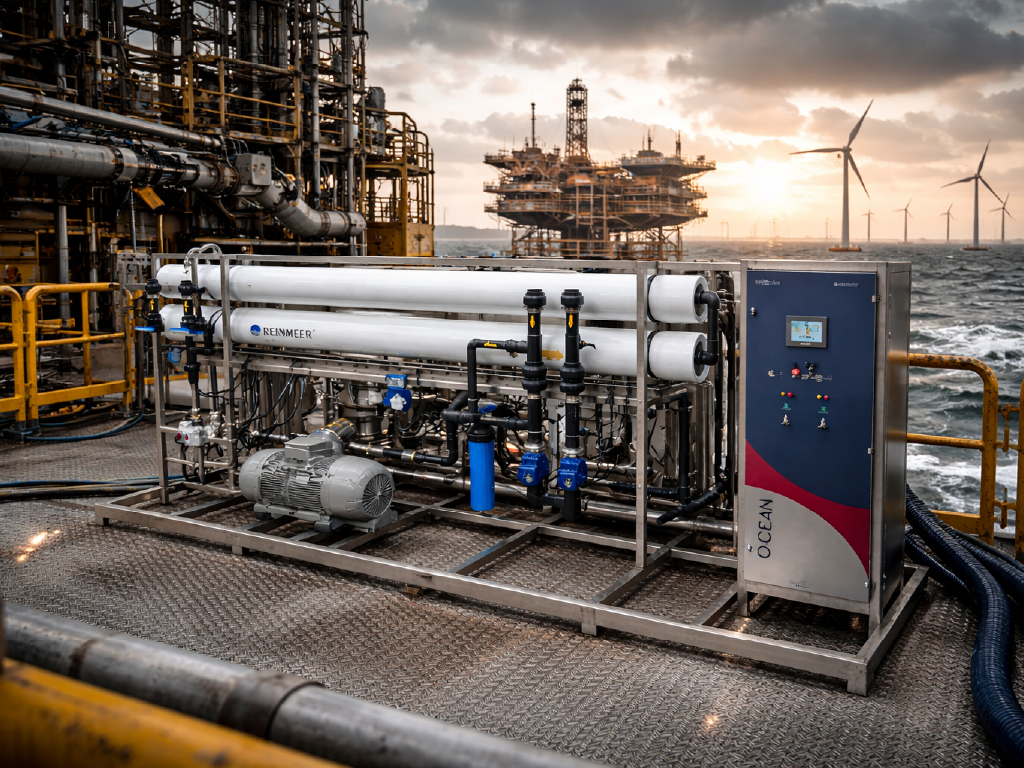
Reverse osmosis systems used on Ships and Offshore Platforms perform the main stage of drinking and utility water production by reducing the high salinity of seawater. At the system outlet, the required mineral balance, disinfection, final filtration, and quality control steps can be applied to obtain water suitable for its intended use.
A safe water source for the crew is especially important for ships that do not visit ports for long periods. Meeting daily needs such as drinking, food preparation, showering, laundry, and cleaning without interruption increases the quality of life on board. On offshore platforms, maintaining hygiene and comfort standards for personnel working in shifts is an important part of operational discipline.
Safe drinking water production is not limited to equipment installation. Regular analysis, maintenance, and monitoring processes also determine system performance.
An ideal water management approach for Ships and Offshore Platforms should focus not only on production capacity but also on quality continuity. Monitoring parameters such as conductivity, salinity, pH, flow rate, pressure, and filter condition allows possible problems to be detected early. Thanks to automation systems, operators can monitor the production process more easily, plan maintenance needs on time, and prevent unnecessary downtime. In this way, a safe water source for the crew becomes more than a daily consumption element; it becomes a critical system that contributes to the overall operational reliability of the vessel or platform.
Container-Type Mobile Systems: Fast Installation and Flexibility
Container-type mobile desalination systems are among the solutions that provide flexibility and fast commissioning advantages for Ships and Offshore Platforms. Not every operation is suitable for a permanent technical room installation. In some projects, temporary water demand, emergency response needs, seasonal operation, site relocation, or capacity increase may be required.
Container-type systems are designed to adapt to these changing conditions. Since all main equipment is positioned regularly inside the container, once the system arrives on site, connections can be completed, commissioning tests can be finalized, and production can begin more quickly. This approach saves time in offshore or nearshore operations.
One of the biggest advantages of container-type mobile systems for Ships and Offshore Platforms is portability. The system can be transported to the required location, reused in different projects, and included in capacity planning as the operation grows.
For offshore energy fields, temporary work camps, port operations, shipyard projects, island facilities, and industrial applications far from shore, container systems offer a practical solution. When the water intake line, energy connection, brine discharge, and product water storage plan are designed correctly, reliable fresh water production can be achieved in a short time. Thus, Ships and Offshore Platforms gain a more agile infrastructure compared to traditional water transportation processes.
Another advantage of container-type systems is that the equipment operates in a protected environment. In the marine environment, salt, humidity, wind, and external factors can affect equipment life. The container structure keeps system components in a more controlled area and provides ease of maintenance and operation. When details such as internal lighting, ventilation, drainage, panel placement, chemical dosing area, and service access are designed correctly, a safe and organized working area is created for operators.
For Ships and Offshore Platforms, the ability of the technical team to intervene quickly, the ease of maintenance processes, and the protection of the system from external conditions are important for long-term performance. Therefore, container-type mobile solutions are a strong choice not only in terms of portability but also in terms of operational safety.
| Solution Type | Key Advantage | Usage Area | Logistics Contribution |
|---|---|---|---|
| Marine-type compact system | Integrated structure that occupies less space | Commercial ships, service boats, cruise ships | Reduces water storage needs |
| Ocean Series compact solution | Scalable capacity according to demand | Marine vessels with limited technical space | Optimizes space management |
| Container-type mobile system | Fast installation and portability | Offshore sites, port projects, temporary operations | Can be reused in different locations |
| High-capacity seawater desalination system | Continuous production performance | Large platforms and long-term offshore operations | Reduces tanker and supply dependency |
When considered from the perspective of Ships and Offshore Platforms, the logistics benefits of water production systems are not limited to meeting daily consumption. Reducing water supply planning directly contributes to the operation schedule. Reducing the need to return to port creates route flexibility.
Eliminating tanker waiting times helps prevent project delays. Carrying less water means more efficient storage and load management. Especially for offshore platforms operating in remote fields, these advantages create serious operational value. A system that can produce its own water reduces the dependence of offshore operations on external supply chains and makes decision-making processes more controlled.
In terms of cost, on-site water production for Ships and Offshore Platforms carries significant long-term savings potential. Water tanker services, transportation fees, fuel expenses, port operations, personnel time, and waiting costs can create a high total burden.
In contrast, a correctly selected seawater desalination system can reduce unit water costs by providing regular production after the initial investment. Of course, system capacity, energy consumption, maintenance intervals, membrane life, and usage intensity are the main variables of this calculation. However, especially in operations with continuous water demand, on-site production creates a more predictable and manageable cost structure compared to external supply.
Sustainability is also becoming an increasingly important topic for Ships and Offshore Platforms. Reducing water transportation operations can decrease logistics movement and the related fuel consumption. In addition, more planned resource management helps prevent unnecessary water storage and waste.
With energy efficiency, automation control, and proper maintenance practices in modern reverse osmosis systems, a more balanced operating model can be established. Sustainable water management at sea is valuable not only in terms of environmental responsibility but also in terms of corporate reputation and operational efficiency. Therefore, seawater desalination systems should be considered a strategic investment for the future of Ships and Offshore Platforms.
When selecting a system for Ships and Offshore Platforms, focusing only on capacity is not enough. The intended use of the water, seawater intake conditions, energy infrastructure, maintenance access, operating duration, number of personnel, automation level, and existing installation structure must be evaluated together. In addition, ventilation, vibration conditions, drainage planning, and safe service spaces in the installation area should also be considered during the project phase. Systems designed with the right engineering approach can provide stable performance for many years.
Incorrect capacity selection or insufficient pre-filtration may shorten membrane life, increase energy consumption, and cause fluctuations in water quality. Therefore, professional site assessment, accurate project design, and after-sales technical support are highly important for Ships and Offshore Platforms.
Conclusion: Wherever You Are, Your Water Is with You
In offshore operations, water is as strategic a resource as energy, fuel, and communication infrastructure. Reliable water production for Ships and Offshore Platforms provides important advantages in terms of operational independence, logistics convenience, crew comfort, and cost control. Marine-type compact systems offer efficient solutions in limited spaces, while compact structures such as the Ocean Series can adapt to different capacity needs.
Container-type mobile systems create a strong alternative for temporary or variable projects with their fast installation, portability, and flexible use advantages. All these solutions transform water from an externally supplied resource into a reliable value that can be produced within the operation.
Producing your own water on Ships and Offshore Platforms is not only a technical preference but also a strategic management decision in modern marine operations. Reducing water tanker waiting times, decreasing port dependency, ensuring crew access to safe water, and being able to activate the system wherever needed directly improve operational quality.
When seawater desalination technologies are designed correctly, uninterrupted water management becomes possible during long voyages and offshore field operations. Therefore, in today’s maritime and offshore investments, water production infrastructure should be seen as one of the key parts of being prepared for the future. Wherever you are, with the right system, your water is with you.
If you want to make water supply in your offshore operations safer, more flexible, and more sustainable, you can evaluate customized seawater desalination solutions with a professional engineering approach.
Tuna Desalination offers treatment infrastructures suitable for different capacities and usage scenarios for Ships and Offshore Platforms, from compact marine-type systems to container-type mobile solutions.
Your operation’s daily water demand, available space conditions, energy infrastructure, and intended use can be analyzed to determine the most suitable system configuration.
In this way, you can reduce the need to wait for water tankers at sea, create a safe drinking water source for your crew, and manage your logistics costs more controllably in the long term.
To get detailed information, review system options, and evaluate the right solution for your project, you can visit the Tuna Desalination website. A properly planned desalination system does not only meet today’s water demand; it also strengthens your future operational flexibility. Whether you are at sea, in port, on a platform, or at a mobile site, you can take water management under your own control without depending on external sources.