
How Does Seawater Turn into Fresh Water? What Is Reverse Osmosis Technology?
Mayıs 4, 2026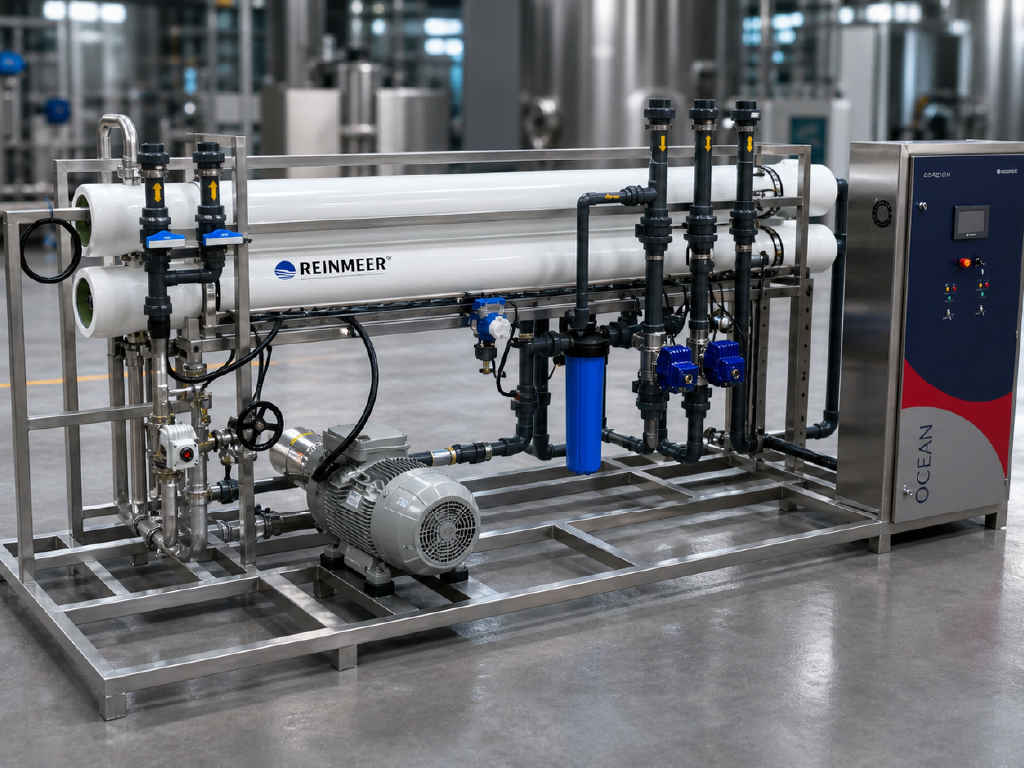
Water is no longer only a basic need. For businesses, it has become a strategic resource directly connected to cost management, sustainability, operational safety, and investment planning. Especially for hotels, holiday resorts, industrial facilities, coastal settlements, port operations, production plants, and large-scale residential areas, uninterrupted access to clean water is becoming more critical every year. Rising municipal water prices, transported water costs, drought risks, and regional water restrictions are pushing businesses to search for more independent and long-term solutions.
At this point, Seawater Desalination Systems offer a modern engineering solution that transforms seawater into usable water quality and significantly reduces water costs. With the right capacity selection, energy-efficient equipment, advanced membrane technology, and professional operation planning, it is possible for a facility to achieve savings of up to 80% in water expenses. This saving is not limited to water bills alone; it also provides serious advantages in logistics, storage, supply security, and operational continuity.
Today, the way businesses view water is changing. In the past, water was seen only as an expense item purchased externally or supplied through municipal networks. Now, companies that can create their own water source gain a stronger competitive position. Especially for facilities located by the sea, Seawater Desalination Systems create a sustainable water production model by using an existing natural resource. In these systems, seawater passes through pre-treatment stages, is directed to reverse osmosis membranes through high-pressure pump technology, and salt, excess minerals, particles, organic matter, and unwanted components are separated from the water. As a result, water can be produced in different qualities suitable for drinking water, utility water, process water, or specific facility needs. This approach reduces the company’s dependence on external sources while making costs more predictable and controllable.
$1 Per Ton: Is It Possible to Produce Drinking Water from Seawater?
The idea of producing drinking water from seawater was once considered a high-cost technology suitable only for large-scale projects. However, today, thanks to developments in membrane technologies, energy recovery systems, automation infrastructure, and more efficient pump solutions, Seawater Desalination Systems have become much more accessible. Under suitable conditions and with a correctly engineered system, the cost of producing one ton of drinking or utility water from seawater can decrease to approximately 1 dollar. This value may vary depending on electricity prices, raw water quality, system capacity, maintenance plan, membrane efficiency, chemical consumption, and operational discipline. However, the main fact remains clear: for businesses with high water demand, treating seawater at the source can become a much more economical option in the long term compared to purchasing water or transporting it by tanker.
One of the most important factors behind this cost advantage is designing the system specifically according to the facility’s needs. A system selected below the required capacity may struggle to meet the company’s water demand and may increase maintenance costs because it operates under constant pressure. On the other hand, an oversized system can unnecessarily increase the initial investment cost. For this reason, when planning Seawater Desalination Systems, daily water consumption, peak usage hours, seasonal intensity, storage capacity, water usage areas, and quality expectations must be analyzed in detail. For example, in a hotel, the number of rooms, restaurant and kitchen usage, laundry consumption, pool make-up water, landscape irrigation areas, and technical room requirements should be calculated separately. In industrial facilities, the production process, washing lines, cooling systems, and auxiliary operations must also be evaluated according to their water quality expectations.
Producing water at approximately 1 dollar per ton is not possible simply by purchasing a device. It requires the right engineering approach. The quality of pre-treatment filtration, membrane protection, automatic washing procedures, pressure control, energy optimization, and regular maintenance directly affect system performance. Reverse osmosis membranes used in Seawater Desalination Systems are considered the heart of the system. In order for these membranes to operate with a long service life, suspended solids, sediment, biological load, chlorine, oil, and other contaminants in seawater must be controlled before the desalination process. Otherwise, membrane clogging, capacity loss, increased energy consumption, and fluctuations in water quality may occur. Therefore, for facilities that want to reduce operating costs, not only production capacity but also long-term system efficiency is a critical criterion.
Energy Efficiency and Savings with the Reinmeer Ocean Series
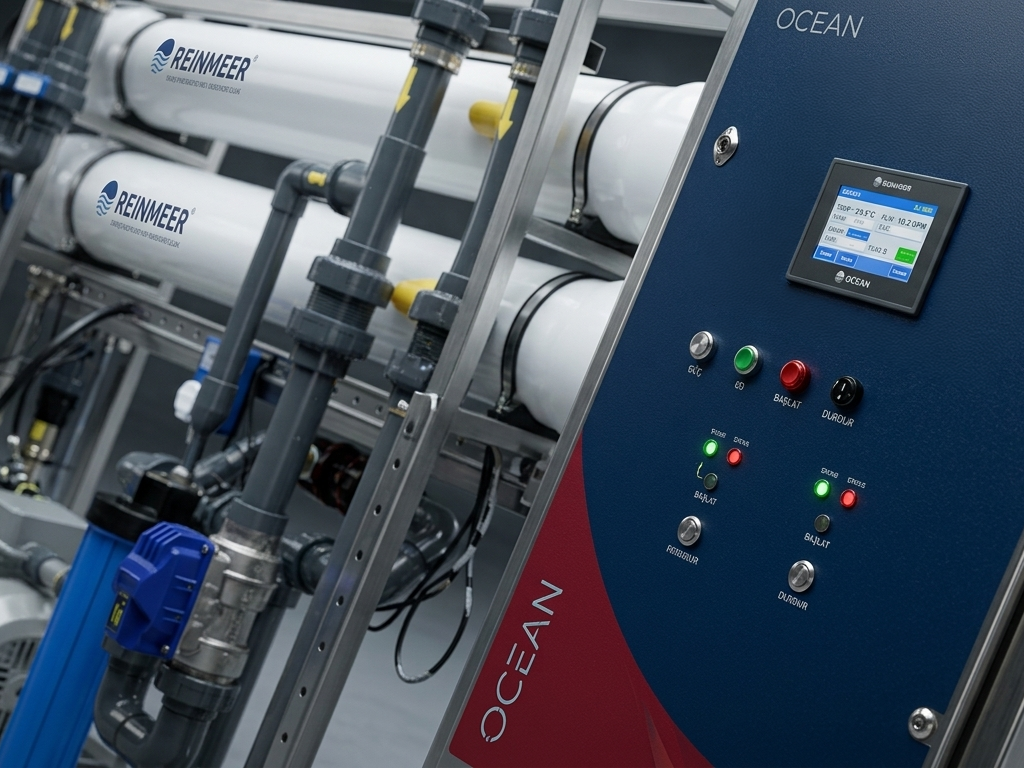
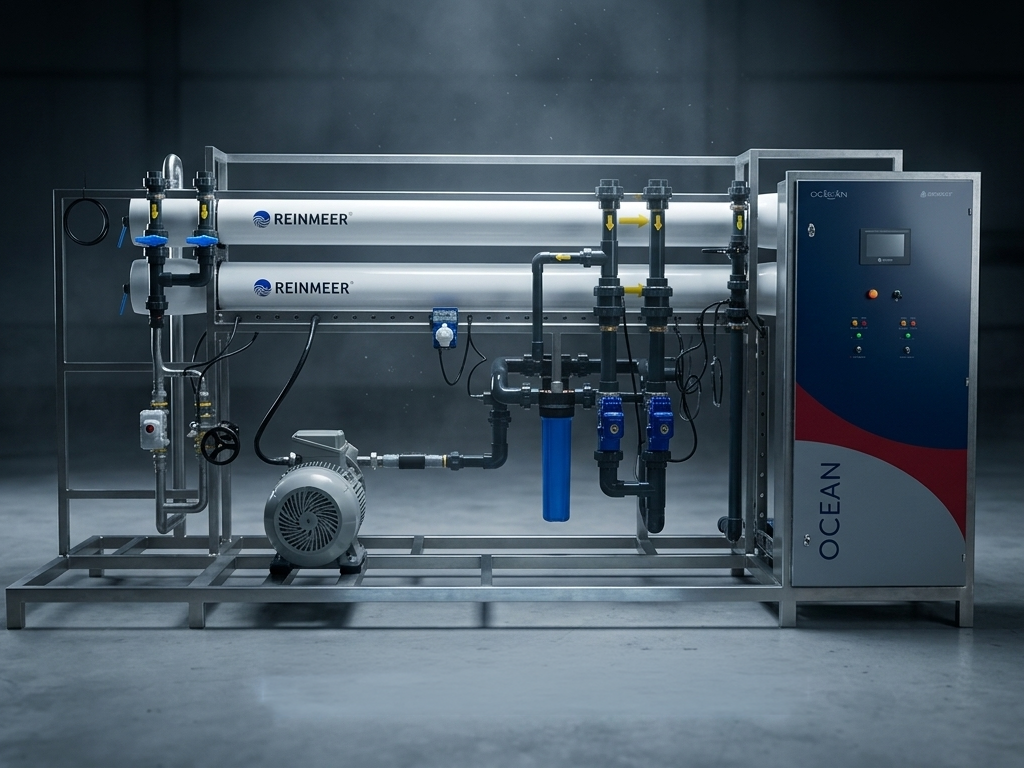
The Reinmeer Ocean Series offers a modern solution approach developed for businesses aiming to produce reliable and efficient water from seawater. This series focuses on energy efficiency, durable equipment selection, automation control, and low operating costs within Seawater Desalination Systems. In the seawater treatment process, one of the largest expense items is energy consumption. Because seawater has a high salinity level, it requires high pressure to pass through reverse osmosis membranes. Therefore, the pump technology, energy recovery equipment, automation scenarios, and system design directly determine the total cost. In efficiency-focused solutions such as the Reinmeer Ocean Series, the goal is to produce the same amount of water with lower energy consumption and reduce the company’s unit water cost.
Energy savings do not only mean reducing electricity consumption. They also mean that the system operates more steadily, equipment wears out less, maintenance intervals are managed more efficiently, and water production quality remains stable. Advanced automation infrastructure in Seawater Desalination Systems monitors flow rate, pressure, conductivity, tank level, and operating status, giving the operator more controlled management. In this way, the system does not run unnecessarily, production is carried out according to actual need, and the system can automatically start and stop based on water tank levels. This feature is especially advantageous for hotels with seasonal intensity or facilities with variable production plans. Since the system operates only according to demand, unnecessary energy consumption and equipment wear are reduced.
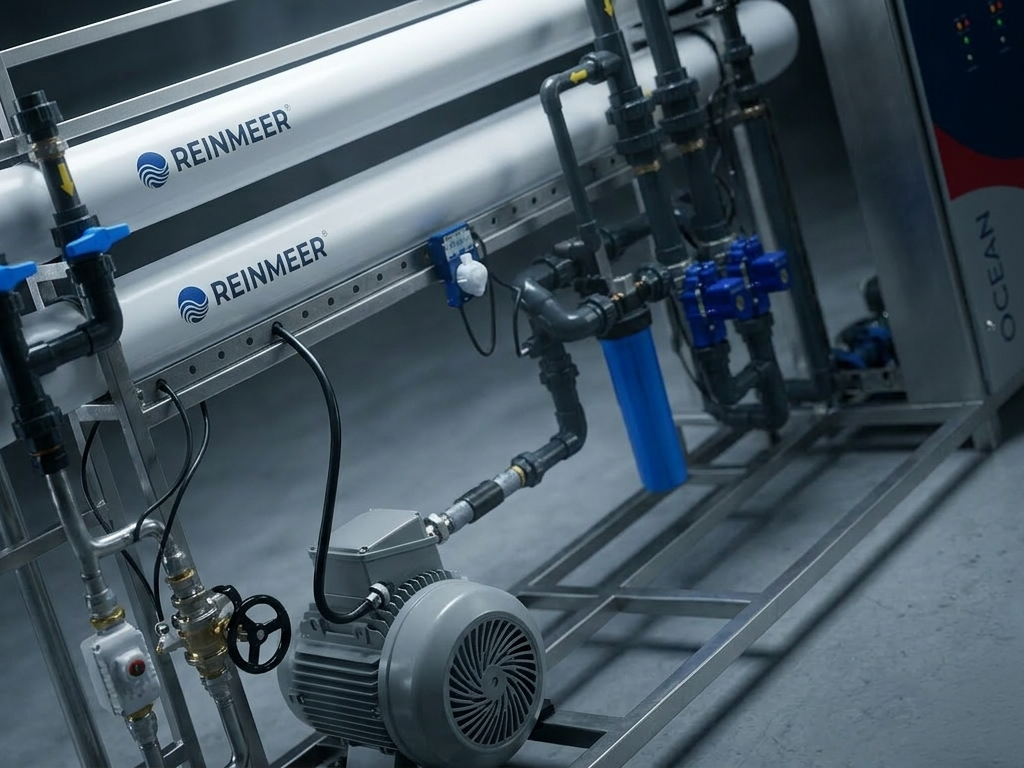
In a facility designed with the Reinmeer Ocean Series, the aim is to transform seawater into a strategic resource for the business. In coastal regions, seawater is an accessible source, but engineering quality is essential for using this source safely and sustainably. Materials used in Seawater Desalination Systems must be resistant to the corrosive effects of seawater, connection equipment must be selected correctly, and stainless steel or suitable composite components must be used to determine the system’s service life. In addition, proper planning of filtration stages, membrane protection, and healthy operation of automatic cleaning processes form the foundation of long-term savings. Therefore, when evaluating the initial investment, companies should not focus only on the device price. Energy consumption, ease of maintenance, spare part availability, and technical service assurance must also be considered.
Comparison with Traditional Municipal Water and Transported Water Costs
For many businesses, water cost is not limited to the unit price shown on the invoice. In regions where municipal water is insufficient, transported water may be required. In the transported water model, additional expenses such as tanker cost, logistics planning, storage needs, quality control risks, and supply continuity arise. This situation can become a serious operational burden, especially during peak season for hotels, summer housing complexes, tourism facilities, and coastal businesses. Seawater Desalination Systems, on the other hand, produce water within the facility itself and reduce dependence on external supply chains. As a result, the business keeps water supply under its own control instead of leaving it to daily market conditions, transportation distance, or regional restrictions.
| Water Supply Method | Main Cost Items | Operational Risk | Long-Term Advantage |
|---|---|---|---|
| Municipal Water | Subscription, consumption fee, gradual price increases | Interruptions, regional restrictions, price increases | Easy to use, but low control |
| Transported Water | Tanker, fuel, logistics, storage, quality control | Supply delays, quality changes, high seasonal cost | Short-term support solution |
| Seawater Desalination Systems | Initial investment, energy, maintenance, consumables | Requires professional maintenance | Low unit cost and high independence |
The comparison in the table shows that businesses should focus not only on today’s water price but also on the total cost of ownership. Municipal water may seem like an easy solution at first glance, but price increases, quota practices, and supply security problems can pressure the operating budget in the long term. Transported water can become one of the most expensive models, especially in high-volume consumption. In contrast, Seawater Desalination Systems require an initial investment, but they have the potential to reduce unit costs for businesses that consume water regularly and in large quantities. Especially in facilities with daily consumption of tens or hundreds of tons of water, the system can pay for itself in a shorter period.
The goal of reducing water costs by 80% may not be achieved under the same conditions for every business. However, this rate can become realistic for companies that pay high prices for transported water, have limited access to municipal water, or experience water supply problems due to seasonal intensity. The savings achieved through Seawater Desalination Systems become more visible as system capacity increases. This is because the fixed investment cost is distributed over a lower value per ton as the amount of produced water increases. Therefore, high-consumption businesses can receive faster results from a seawater desalination investment. In addition, when a facility produces its own water, the need for emergency tankers, high-season price fluctuations, and supply uncertainties decrease.
Payback Period Analysis for Your Business
When evaluating an investment in Seawater Desalination Systems, one of the most important questions is how long it will take for the system to pay for itself. The payback period can be calculated by dividing the investment cost by annual savings. However, for a realistic analysis, companies should consider not only the device cost but also installation, infrastructure, seawater intake line, pre-treatment, storage, energy consumption, maintenance, consumables, and technical service expenses. Similarly, when calculating current water costs, municipal water bills, tanker payments, storage expenses, losses caused by water quality, and operational disruptions should also be included. This holistic calculation gives the business a clearer investment perspective.
For example, imagine a hotel that consumes 100 tons of water per day. If this hotel obtains water through tankers or high-cost municipal tariffs, its monthly expenses can reach very high levels. When the same hotel produces its own water with correctly sized Seawater Desalination Systems, it can significantly reduce its cost per ton. Here, the savings are not limited to the water price; they also appear in operational safety. Interruptions in water supply can create much larger costs in sectors such as hospitality, where service quality is directly linked to customer satisfaction. Therefore, a seawater desalination investment is not only a financial decision but also a strategic infrastructure decision that protects service continuity.
| Analysis Criterion | Evaluation Question | Impact on Decision |
|---|---|---|
| Daily Water Consumption | How many tons of water does the business use per day? | Determines capacity and investment scale |
| Current Water Cost | What is the real water cost per ton? | Shows savings potential |
| Energy Expense | What is the electricity cost required for production? | Affects unit production cost |
| Maintenance Plan | How will membrane, filter, and service expenses be managed? | Determines system life and performance |
| Seasonal Intensity | Is consumption stable throughout the year or seasonal? | Affects storage and automation strategy |
The healthiest approach in payback analysis is to professionally examine the company’s current water usage data. Water bills from the last 12 months, tanker purchase records, production consumption reports, seasonal occupancy rates, and the facility’s growth plans provide important data for this analysis. When Seawater Desalination Systems are engineered correctly, they can support not only today’s needs but also future capacity increases. For example, if a holiday resort is planning new blocks, additional pools, or expanded landscape areas, the system can be designed in a modular way accordingly. Thus, the investment can be expanded in the following years without requiring major infrastructure changes again.
One of the ways to shorten the payback period is to optimize the system not only for drinking water production but also according to different usage areas. Not every water usage point requires the same quality. While drinking and kitchen use require more sensitive quality standards, different quality levels may be sufficient for landscape irrigation, technical use, or some process areas. When this distinction is made correctly, Seawater Desalination Systems operate more efficiently and unnecessary treatment load decreases. Businesses can optimize both energy consumption and membrane load by classifying water according to its intended use. This directly reflects on operating costs.
Technical service and after-sales support also play a critical role in the investment decision. Seawater is a more challenging raw water source than freshwater. Salinity, biological load, temperature changes, and suspended solid levels can affect system performance. Therefore, Seawater Desalination Systems require regular monitoring, maintenance, and proper operating knowledge. Without professional support, efficiency may decrease, membrane life may shorten, and the expected savings level may not be achieved. On the contrary, a system operated with correct maintenance procedures can deliver stable performance for many years. For this reason, when evaluating investment cost, technical support quality, spare part continuity, and service accessibility must be taken into account.
Building the Water Strategy of the Future Today
Drought, climate change, population growth, and the decline of water resources make it necessary for businesses to approach water management more strategically. Even in regions where access to water is easy today, cost increases, restrictions, or quality problems may occur in the coming years. Therefore, Seawater Desalination Systems are not only a solution that reduces current costs but also an infrastructure investment that prepares businesses for the future. Especially for companies located by the sea, this technology transforms a natural resource into a controlled, efficient, and sustainable production model. Facilities that can produce their own water are less affected by external supply risks and can plan their operations more safely.
The goal of reducing water costs by up to 80% becomes possible with the right engineering, correct capacity, proper operation, and regular maintenance. Success in a Seawater Desalination Systems investment depends not only on device selection but also on reconsidering the facility’s entire water strategy. Every stage, from the raw water intake point to the storage system, from pre-treatment to reverse osmosis membranes, from automation to after-sales service, must be planned as a whole. When businesses act with this perspective, seawater desalination technology becomes not only equipment that reduces costs but also an infrastructure solution that provides long-term competitive advantage.
If you want to control your company’s water costs, reduce dependence on transported water, and create a sustainable water production model, correctly engineered Seawater Desalination Systems can be a powerful investment opportunity for your business. As Tuna Desalination, we analyze your facility’s daily consumption needs, current water costs, raw water conditions, and future growth plans to develop customized solutions. With the Reinmeer Ocean Series, we aim to make water production more predictable, economical, and reliable by offering energy-efficient, automation-supported, and long-lasting systems.
For coastal hotels, holiday resorts, residential complexes, industrial facilities, and private businesses, every project should be considered not only as a device selection but as a comprehensive water strategy. If you want to learn the most suitable capacity for your facility, calculate your payback period, and create a professional roadmap that will reduce your water costs, you can visit the Tuna Desalination website. The right step you take today means lower costs, safer supply, and a more sustainable business structure in the future.