
How to Reduce Water Costs by 80% with Seawater Desalination Systems
Mayıs 4, 2026
The Logistics Advantages of Producing Your Own Water on Ships and Offshore Platforms
Mayıs 4, 2026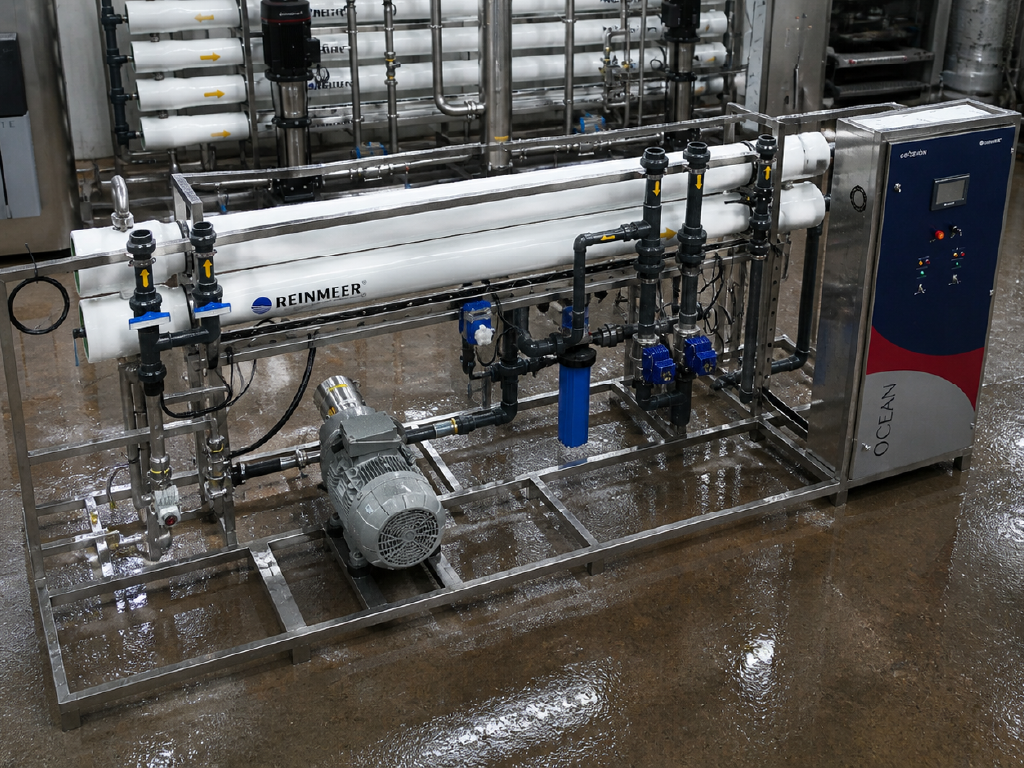
The decrease in water resources, the growing risk of drought, and the increasing population pressure in coastal regions have made it essential for businesses and residential areas to turn toward sustainable water solutions. At this point, Reverse Osmosis Technology stands out as one of the most effective methods modern engineering offers against the global water crisis.
Seawater is not suitable for direct use due to its high salinity level. However, with a properly designed reverse osmosis system, this water can be converted into usable fresh water through controlled filtration, pressure, and membrane technology.
Today, many structures, from hotels and industrial facilities to coastal settlements and agricultural production areas, benefit from seawater desalination systems to meet their uninterrupted water needs. Also known as Reverse Osmosis Technology, this process separates dissolved salts, heavy metals, micro-pollutants, and unwanted particles from water with high efficiency. In this way, it does not only produce water; it also creates a controllable, sustainable, and long-term fresh water source with consistent quality standards.
At the core of Reverse Osmosis Technology are semi-permeable membranes. In natural osmosis, water moves from a low-density environment to a high-density environment. In reverse osmosis, this process is reversed through engineering principles. Seawater is sent to the membrane surface under high pressure, allowing only water molecules to pass through.
Salt, excess minerals, bacteria, viruses, suspended solids, and many dissolved contaminants are retained on the other side of the membrane. As a result, seawater is safely transformed into fresh water. However, the success of the system is not limited only to the quality of the membrane.
Pre-filtration, chemical dosing, pressure control, energy recovery, automation, and regular maintenance processes are also essential parts of efficient production. Especially when working with a challenging source such as seawater, designing the system according to regional water analyses is critically important for long-lasting and economical fresh water production.
Operating Principle of SWRO Systems: Membrane Technology
SWRO, or Seawater Reverse Osmosis systems, are specially developed reverse osmosis solutions designed to obtain fresh water from seawater. In these systems, seawater is first taken into the facility through the raw water intake line. Then, it passes through physical, chemical, and mechanical treatment stages to make it suitable for membranes. Naturally, seawater may contain high amounts of salt, organic matter, plankton, sand, sediment, and microbiological load.
For this reason, sending it directly to the membrane reduces system efficiency and shortens equipment life. In SWRO systems, after the water is brought to a certain quality level, it is transferred to membrane modules through high-pressure pumps. Thanks to the separation process that takes place on the membrane surface, product water with low salinity is formed on one side, while concentrated brine waste water is formed on the other. When the product water reaches the desired quality values, it is stored in tanks as fresh water.
Membrane technology is considered the heart of Reverse Osmosis Technology. SWRO membranes are manufactured with a special structure that can withstand the high salinity of seawater. These membranes provide selective permeability at a microscopic scale. While water molecules pass through the membrane structure, most of the sodium, chloride, calcium, magnesium, and other dissolved ions are retained.
As a result of this process, the fresh water obtained can be adjusted according to its intended use, such as drinking water, process water, irrigation water, or technical utility water. However, every facility does not have the same water requirement. The water quality required by a hotel for pools, kitchens, and guest rooms may differ from the water quality needed by an industrial facility in its process line. Therefore, SWRO systems must be designed specifically for each project in terms of capacity, membrane quantity, pressure range, automation level, and post-treatment units.
The Importance of Pre-Filtration Processes
The first requirement for efficient fresh water production in seawater desalination systems is a strong pre-filtration infrastructure. Pre-filtration is one of the most important stages that protects membranes and determines the overall performance of the system. If sand, sediment, algae, organic matter, mussel larvae, suspended solids, and biological load in seawater reach the membranes directly, clogging, pressure loss, capacity reduction, and chemical cleaning requirements increase.
This situation raises operating costs and negatively affects the service life of the system. Therefore, multi-stage pre-treatment is designed in SWRO systems according to raw water quality. Generally, coarse filters, multimedia filters, activated carbon filters, cartridge filters, and, where necessary, ultrafiltration systems are used. Each stage makes seawater more suitable for membranes and supports sustainable fresh water production.
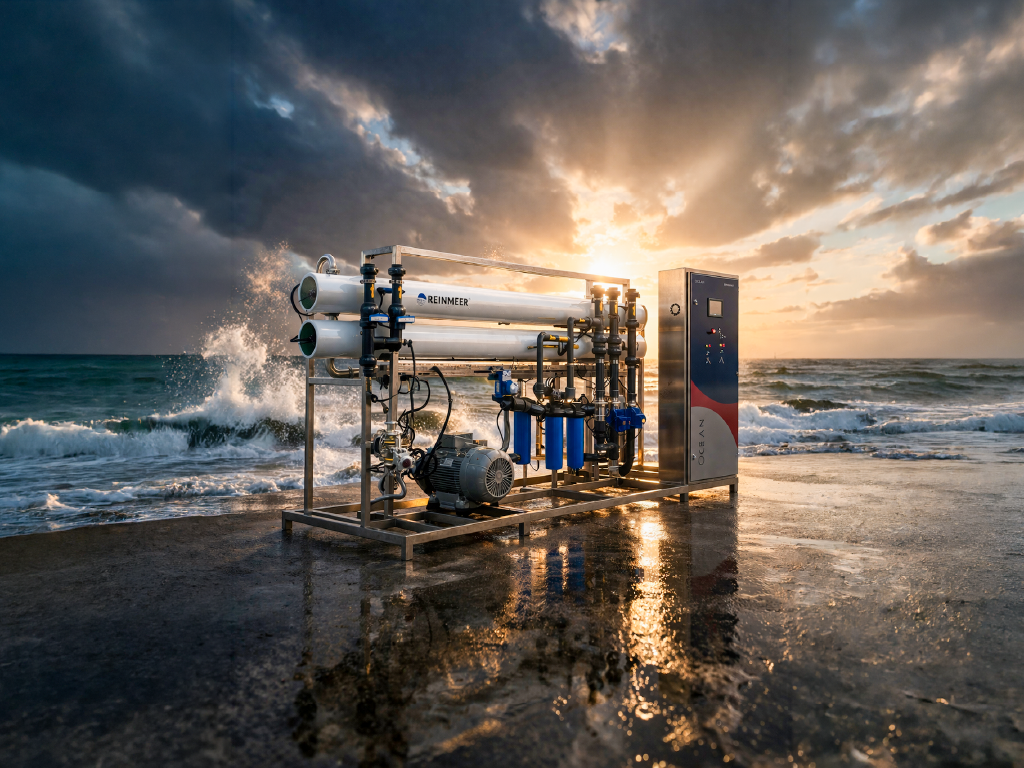
Pre-filtration does not only mean the removal of physical particles. Chemical balance is also highly important in the seawater treatment process. pH adjustment, antiscalant dosing, and in some cases chlorine removal are applied to prevent scaling, biological fouling, or oxidative damage on the membrane surface.
Components such as calcium carbonate, sulfate salts, and silica can accumulate on the membrane surface and reduce water passage. Therefore, a detailed water analysis must be carried out before system design, and the pre-treatment line must be determined according to these data.
With proper pre-filtration, membranes operate more stably, energy consumption remains under control, and the quality of the produced fresh water is preserved for a long time. In short, pre-filtration is not only an auxiliary process; it is a fundamental engineering stage that directly affects the economic and technical success of the entire system.
High-Pressure Pumps and Energy Recovery Units
One of the most critical pieces of equipment required to obtain fresh water from seawater is the high-pressure pump. Seawater has osmotic pressure due to its high salinity level, and efficient water passage through the membrane cannot be achieved without overcoming this pressure. High-pressure pumps make the separation process possible by sending water to the membranes at the required pressure level.
When selecting a pump, flow rate, pressure, energy consumption, material durability, and operating conditions must be considered. Since seawater has corrosive properties, stainless steel or special seawater-resistant materials are preferred for pumps and connection equipment. Incorrect pump selection increases energy costs and disrupts system stability. For this reason, high-efficiency pumps are among the basic components of reliable fresh water production.
One of the most important cost items in SWRO systems is energy consumption. Especially in high-capacity facilities, energy efficiency directly affects the return on investment period. At this point, energy recovery units come into play. The concentrated brine waste water leaving the membrane still has high pressure.
Energy recovery systems reuse part of this pressure energy and reduce the load on the high-pressure pump. As a result, less energy is consumed to produce the same amount of fresh water. Energy recovery technologies used in modern SWRO facilities can significantly reduce operating costs.
This makes seawater desalination not only technically possible but also economically applicable. Especially for hotels, holiday resorts, factories, and coastal settlements, energy optimization is one of the most important parts of a long-term fresh water strategy.
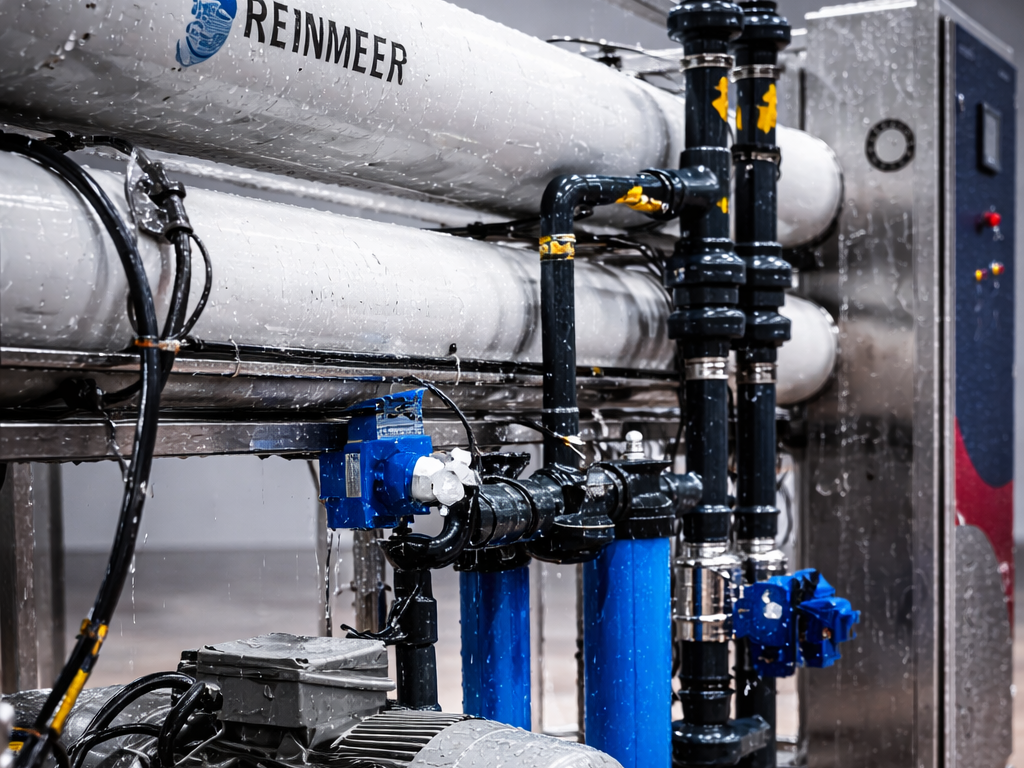
| System Stage | Main Function | Contribution to Fresh Water Production |
|---|---|---|
| Raw Water Intake | To take seawater into the system in a controlled way | Provides a continuous and stable source |
| Pre-Filtration | To reduce particles, sediment, and organic load | Protects membrane life and water quality |
| High Pressure | To create the required pressure for membrane passage | Enables efficient separation |
| Membrane Separation | To remove salt and contaminants from water | Converts seawater into fresh water |
| Post-Treatment | To balance pH, minerals, and disinfection | Creates water quality suitable for the intended use |
Maintenance and Longevity in Seawater Desalination Systems
Long-lasting performance in seawater desalination systems cannot be achieved only through the selection of quality equipment. Systems must be supported with regular monitoring, proper operation, and planned maintenance procedures.
In SWRO facilities, pressure values, flow rate, conductivity, pH, temperature, membrane pressure difference, and product water quality must be checked regularly. These data provide important clues about the health of the system. For example, an increase in product water conductivity may indicate a decrease in membrane performance.
An increase in pressure difference may show that fouling or clogging has started on the membrane surface. When these indicators are detected early, intervention can be made without stopping the system, and interruptions in fresh water production can be prevented.
Maintenance processes include cartridge filter replacement, chemical dosing control, pump maintenance, sensor calibration, pipeline inspection, and membrane chemical cleaning when necessary. Membrane cleaning is an important process that restores system performance, but performing it too frequently may reduce membrane life.
Therefore, the cleaning decision should be made according to measurement data. In addition, proper training of system operators is as important as maintenance. Incorrect valve use, wrong chemical dosing, or improper shutdown procedures may cause serious damage to the system. With a professional operating approach, SWRO systems continue to produce stable fresh water for many years.
Especially for hotels and tourism facilities with seasonal intensity, carrying out maintenance plans before the season provides a major advantage for uninterrupted water management during the summer months.
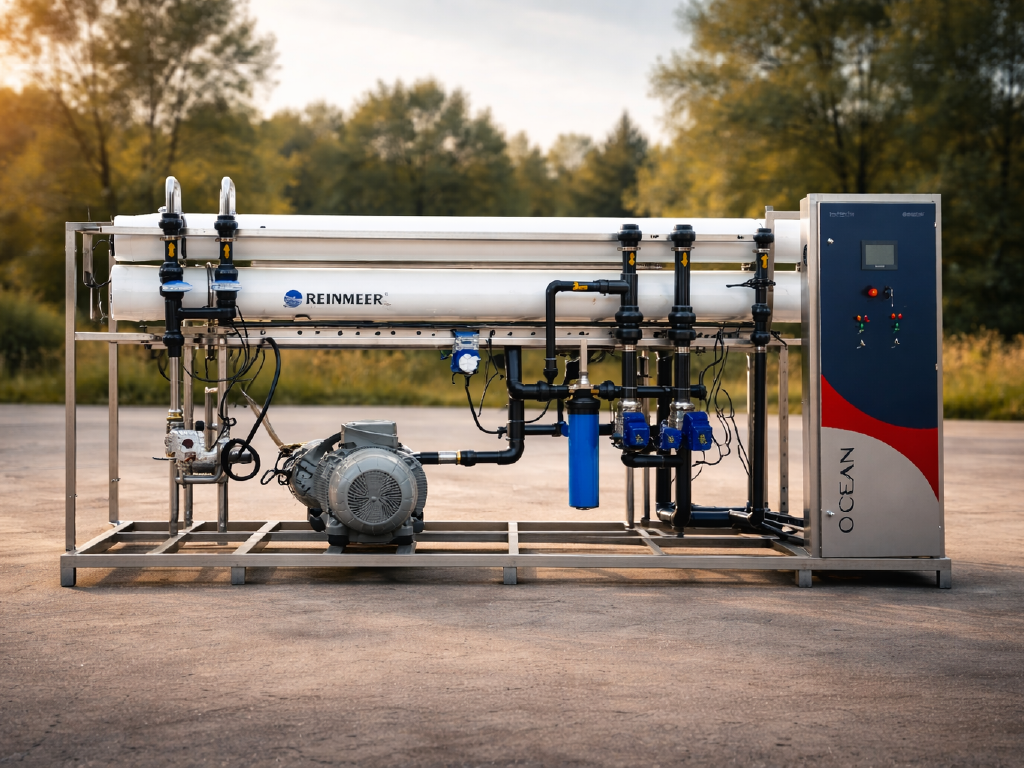
For seawater desalination systems to be long-lasting, the right engineering decisions must be made during the design phase. Capacity calculation should not be based only on daily water consumption. Peak usage hours, storage needs, raw water quality, and future growth plans must also be considered.
A system installed with insufficient capacity operates constantly under high load, shortening equipment life. In systems designed larger than necessary, investment cost increases and inefficient operation may occur. A project-based engineering approach is required to maintain this balance. A properly engineered facility optimizes energy consumption, balances maintenance intervals, and makes fresh water production sustainable at the desired quality.
For this reason, when investing in SWRO systems, businesses should focus not only on the device price but also on the total cost of ownership, service infrastructure, and engineering support.
Post-treatment also plays an important role in making fresh water quality suitable for its intended use. Water coming out of reverse osmosis may have very low mineral content. If it will be used as drinking water, pH balance, mineral structure, and disinfection level must be adjusted according to regulations.
For industrial use, different values may be targeted according to process requirements. In some applications, remineralization, UV disinfection, chlorination, storage tank hygiene, and distribution line control are required. If these stages are neglected, the fresh water successfully produced at the membrane outlet may lose quality in the distribution system.
Therefore, seawater desalination is not a process that ends at the membrane outlet. The entire line, from source to tap, must be handled with engineering discipline.
Reverse Osmosis Technology offers a strategic solution in water management by converting seawater into a usable fresh water source. Thanks to this technology, businesses in coastal regions can reduce dependence on municipal water or transported water. Especially for hotels, production facilities, healthcare structures, marinas, and residential projects where water interruptions directly affect operations, SWRO systems provide a reliable alternative.
However, purchasing the system alone is not enough for a successful result. Water analysis, capacity planning, equipment selection, automation, energy efficiency, and maintenance processes must be evaluated as a whole. Seawater desalination systems designed with a professional engineering approach can provide high-quality, sustainable, and economical fresh water production for many years.
Conclusion: Durable Systems Optimized with Engineering Power
Converting seawater into fresh water is not merely a filtration process. It is a holistic process that requires advanced engineering, the right equipment selection, and sustainable operation management. Reverse Osmosis Technology transforms seawater into a reliable resource through membrane structure, high-pressure control, pre-treatment design, and energy recovery solutions.
With properly designed SWRO systems, businesses gain independence in water supply, make their costs more predictable, and reduce operational risks. For a long-lasting system, regular maintenance, correct chemical management, sensor monitoring, and expert service support must not be neglected. In today’s world, where water resources are becoming increasingly valuable, managing fresh water production sustainably is not only a technical preference but also a strategic investment in the future.
If you want to create a reliable fresh water source for your business, facility, or coastal project, seawater desalination systems offer a strong long-term solution. However, every project does not have the same water quality, capacity, or usage scenario. Therefore, choosing the right system requires much more than selecting a standard device.
Raw water analysis, capacity calculation, energy consumption, maintenance planning, and water quality suitable for the intended use must be evaluated together. Tuna Desalination develops solutions that convert seawater into fresh water efficiently, durably, and sustainably with its engineering-focused approach. Systems designed for hotels, industrial facilities, coastal structures, marinas, and private projects provide a reliable infrastructure for businesses aiming for uninterrupted water management.
You can also explore Tuna Desalination solutions to control water costs, reduce dependence on external sources, and prepare for the future with a stronger water strategy. A properly planned SWRO investment transforms today’s water need into tomorrow’s sustainable advantage.